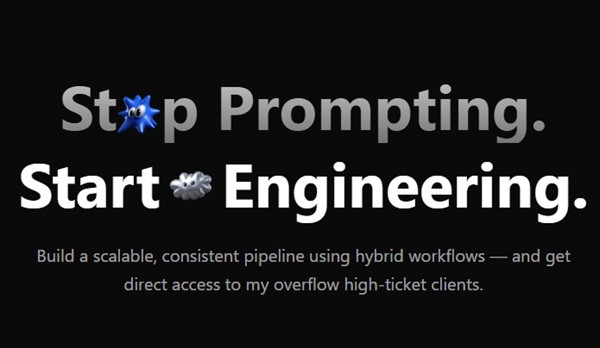
In the rapidly evolving landscape of digital content creation, a paradigm shift is underway, spearheaded by forward-thinking methodologies. At the forefront of this transformation is the influence of Ohneis, a visionary approach that transcends traditional AI generation techniques, promising unparalleled consistency and control for professional media production.
Ohneis
The world of AI-assisted media creation is at a precipice, teetering between hobbyist experimentation and robust professional application. For too long, creators have wrestled with the inherent unpredictability of generative AI, a frustration that Andreis Ohneisser sought to address with the development of the Ohneis Visual Engineering Blueprint. This framework doesn’t just offer incremental improvements; it proposes a fundamental reorientation of how AI is integrated into workflows. Instead of relying on the often-unpredictable nature of text prompts, the Ohneis system champions a move towards “visual engineering.” This means treating AI generation not as a black box to be coaxed into submission with clever wording, but as a component within a larger, meticulously designed system where every element is controllable, predictable, and repeatable.
The critical failure identified by Ohneis is the pervasive lack of consistency and control that plagues standard AI workflows, rendering them unsuitable for high-stakes commercial work where brand integrity and professional polish are paramount. This blueprint aims to rectify these shortcomings by introducing a node-based, hybrid pipeline that meticulously integrates real-world footage with AI generation, thereby eliminating common technical glitches and the dreaded character morphing that invariably leads to brand rejection. The essence of Ohneis is about bringing engineering discipline to the art of AI media creation, transforming subjective interpretation into objective, verifiable results. The system is thus structured not just as an educational program, but as a comprehensive professional certification designed to equip creators with the skills to become “Visual Engineers,” capable of securing lucrative, high-ticket brand deals.
The limitations of conventional prompting methods are starkly evident when examined through the lens of professional commercial demands. The Ohneis framework aptly labels this common pitfall the “Prompting Trap.” This methodology, characterized by its reliance on descriptive text inputs, is presented as fundamentally insufficient for the rigorous requirements of professional-grade commercial work. Several systemic issues contribute to this inadequacy, creating a cycle of frustration and professional compromise. Firstly, inconsistency is a rampant problem.
Characters frequently alter their appearance, morph between shots, or exhibit subtle but noticeable changes in lighting and texture, shattering any hope of narrative or brand continuity. This makes it impossible for a brand to maintain a cohesive visual identity across a campaign when the AI cannot reliably reproduce key assets. Secondly, there is a profound lack of control. Creators often find themselves locked in an hours-long battle, endlessly tweaking text prompts, adjusting parameters, and re-generating outputs, yet still failing to achieve the precise visual requirements stipulated by a client. This reactive and often futile process drains valuable time and resources.
Furthermore, standard AI outputs are frequently plagued by technical glitches. These can range from strange artifacts, impossible physics, distorted anatomy, to jarring inconsistencies in rendered elements. Such flaws are not merely aesthetic annoyances; they are professional deal-breakers, leading directly to project rejection, loss of client trust, and the forfeiture of potential repeat business. Consequently, creators who remain solely within the confines of prompt-only methodologies often find themselves relegated to posting experimental pieces for social media engagement, struggling to secure meaningful professional contracts that demand reliability and precision. The Ohneis approach directly confronts these issues, positing that true mastery lies not in the art of crafting clever prompts, but in the science of engineering visual assets.
The Ohneis Visual Production System Architecture represents a radical departure from the simple, often ephemeral, text-to-image or text-to-video interactions that have characterized early AI media generation. This system replaces such ad-hoc methods with a structured, robust engineering pipeline designed for professional application. The architecture is built upon two critical technical pillars that ensure both precision and creative flexibility.
The first pillar is Node-Based Control. Unlike the linear, sequential nature of traditional prompting, which can feel like shouting instructions into a void and hoping for the best, the Visual System employs a node-based paradigm. This familiar concept in professional 3D animation and visual effects software allows for the explicit definition and connection of various processes, assets, and parameters. In the context of Ohneis, this means that every visual detail—from character anatomy and texture to lighting conditions and camera movement—can be ‘locked’ and precisely controlled. This granular control is intended to eliminate the inherent randomness and variability associated with generative AI, ensuring that elements remain consistent and predictable across an entire production.
The second crucial pillar is the Hybrid Workflow. The true power and cinematic quality of the results achieved within this system stem from its core principle: the seamless fusion of real-world assets with AI capabilities. This integration is not superficial; it involves merging real camera movement, captured footage, and physical lighting with AI-generated elements. This approach grounds the AI output in physical reality, providing a stable foundation that significantly reduces the likelihood of glitches and ensures professional-grade movement, composition, and lighting that adheres to real-world physics and aesthetics. By combining the tangible authenticity of filmed content with the boundless generative power of AI, the Ohneis system offers a pathway to creating media that is both artistically innovative and technically flawless.
The transition from nascent interest in AI-generated imagery to becoming a certified professional capable of commanding substantial project budgets is meticulously mapped out within the Ohneis Blueprint. This journey is organized into three distinct, progressive phases, each building upon the skills and knowledge acquired in the preceding one. The blueprint is not merely a collection of tutorials; it is an engineered pathway to mastery, designed to cultivate what are termed “Visual Engineers.” This designation signifies a departure from passive content creators to active architects of visual media. The first phase, titled “The Foundation,” lays the essential groundwork. It focuses on instilling a deep understanding of traditional cinematic principles. Mastery of lighting, composition, color theory, and camera techniques are deemed non-negotiable prerequisites. Alongside these core artistic and technical skills, creators are introduced to the proprietary “Alpha Prompt System”—a structured, highly controlled method of interacting with AI that forms the bedrock of the Ohneis approach, moving far beyond the ambiguity of standard text prompts.
The second phase, “The Hybrid Workflow,” delves into the practical application of fusing real-world assets with AI generation. This is where the theoretical knowledge from Phase 1 meets the cutting edge of AI technology. Participants learn the technical intricacies of integrating actual camera movements, real footage, and environmental data with AI-generated elements. The goal is to produce cinematic visual outputs that are not only aesthetically compelling but also technically sound, exhibiting stable motion, consistent character representation, and believable integration of synthetic and real elements. This phase is critical for internalizing the core principles of engineering visual consistency and control.
Finally, “The Ecosystem” phase shifts the focus from technical execution to professional deployment and monetization. This encompasses strategies for leveraging the acquired skills in the marketplace, understanding how to scale the visual engineering pipeline for commercial viability, and crucially, gaining access to high-ticket clients, often referred to as “overflow clients” – businesses with substantial budgets seeking top-tier AI-assisted media production. This phase is about translating engineering prowess into tangible financial success, positioning certified Visual Engineers as indispensable assets in the high-stakes world of brand marketing and media production. The entire three-step pipeline is a testament to the Ohneis philosophy: that professional AI media creation requires a disciplined, engineered approach, not just creative flair.
The professional certification component of the Ohneis Blueprint, known as the Ohneis Visual Engineer Certification, is positioned not merely as an academic achievement but as a critical market signal. In an industry saturated with a plethora of AI tools and rapidly emerging practitioners, this certification serves as a verifiable credential, intended to instantly communicate a candidate’s mastery of advanced AI workflows to potential employers, agencies, and clients. The digital badge associated with this certification is designed to be prominently displayed on professional portfolios and platforms like LinkedIn, acting as an immediate differentiator. It signifies that the holder has undergone rigorous training and possesses the specific, in-demand skills to execute complex, consistent, and professional-grade AI-assisted media projects. This branding is crucial because it addresses the inherent skepticism that many brands and agencies hold regarding the reliability and quality of AI-generated content for their campaigns.
The market value proposition associated with this certification is substantial. The system claims to prepare engineers for brand deals that command significant compensation, placing them squarely in the realm of high-ticket projects, typically valued between $5,000 and $10,000 per engagement. This pricing is justified by the promise of consistency, control, and professional polish that the Ohneis methodology provides—elements that are often absent in conventional AI workflows and are therefore highly valued by clients willing to pay a premium for reliability. Beyond individual project acquisition, the certification also grants access to an exclusive ecosystem. This includes entry into a private community of like-minded professionals, facilitating collaboration, knowledge sharing, and ongoing development. Furthermore, certified individuals gain privileged access to a network of overflow high-ticket clients, effectively bridging the gap between comprehensive training and immediate professional employment or contract opportunities. This curated access is designed to accelerate the career progression of Visual Engineers, ensuring that their specialized skills are directly connected to lucrative market demands. The Ohneis certification, therefore, is more than just a qualification; it is a gateway to a higher tier of professional AI media creation, replete with enhanced marketability and earning potential.
The design of the Ohneis Visual Engineering Blueprint meticulously defines its target audience and, just as importantly, its exclusion criteria, underscoring its commitment to cultivating a specific caliber of professional. The system provides a comprehensive suite of resources to support participants throughout their learning journey. These included resources comprise the Full Visual Production System Course, offering in-depth instructional content that covers all facets of the methodology. Complementing this is the Alpha Prompt Library, a curated repository of structured prompt frameworks designed to guide users towards precise and controllable AI outputs. Hybrid Workflow Templates are also provided, offering pre-configured setups that streamline the process of merging real-world footage with AI capabilities. Crucially, participants gain access to a Private Community & Exam, fostering direct interaction with peers for collaborative learning and a rigorous path towards achieving the coveted Ohneis certification.
However, the blueprint explicitly outlines specific boundaries for its intended participants, clearly excluding individuals based on their professional mindset and willingness to adapt to a more technical and disciplined approach. The exclusion criteria are designed to ensure that the program attracts and retains individuals who are genuinely invested in becoming skilled visual engineers, rather than those seeking quick, superficial gains. Individuals seeking “get rich quick schemes” are explicitly unwelcome, as the Ohneis system demands dedication, learning, and technical application. Similarly, those who are “resistant to learning new, complex software interfaces” will struggle, given that visual engineering often involves mastering sophisticated digital tools. Most pointedly, creators who “prefer to type prompts and hope for the best rather than engaging in technical engineering” are not the target demographic. This exclusion reinforces the core philosophy of the Ohneis blueprint: it is a rigorous professional standard designed to transform AI art from a hobbyist pursuit into a scalable, consistent, and highly profitable engineering discipline, demanding a commitment to craftsmanship and technical excellence over passive generation.
Ohneis Prompts
Transitioning from the conceptual understanding of AI’s potential to its tangible, professional application requires a structured methodology, and the Ohneis blueprint offers precisely this through its elegantly designed 3-Step Engineering Pipeline. This framework is not merely about learning new tools; it’s about fundamentally reshaping one’s approach to digital content creation, moving from a passive, somewhat speculative mode of “prompting” to an active, controlled discipline of “visual engineering.” The named keyword Ohneis prompts. refers not to simple text inputs, but to a sophisticated, underlying system that enables precise control within the broader engineering paradigm. The initial phase, “The Foundation,” is paramount. It emphasizes the acquisition and mastery of traditional cinematic principles.
This includes a deep dive into lighting techniques that evoke mood and define space, compositional strategies that guide the viewer’s eye and enhance storytelling, and a thorough understanding of camera movement that dictates pacing and perspective. These skills are the bedrock of visual communication, irrespective of the technology used. Simultaneously, creators are introduced to the proprietary Alpha Prompt System, which is intrinsically linked to the Ohneis methodology. This system represents a departure from generic text prompts; it’s a structured framework for inputting creative direction in a manner that AI systems can interpret with greater fidelity and predictability. It’s about providing specific, actionable data points rather than vague descriptions, thereby enabling the creation of consistent visual elements from the outset.
The second phase, “The Hybrid Workflow,” represents the core technical innovation of the Ohneis system. Here, the theoretical underpinnings of cinematic principles and structured prompting are applied to create a seamless fusion of real-world assets with AI generation. This is where the practical engineering takes place. Participants learn to integrate actual camera movements captured during principal photography with AI-generated elements, ensuring that motion, scale, and perspective align perfectly. This integration is crucial for achieving hyper-realistic results and avoiding the uncanny valley effect often associated with fully AI-generated content. Stability is a key outcome of this phase; by grounding AI outputs in physical reality—using real footage as a reference for lighting, motion, and composition—the system dramatically reduces the likelihood of common glitches and ensures that generated elements behave realistically within the scene. This hybrid approach is what allows for the creation of assets that are both novel and inherently believable.
The third and final phase, “The Ecosystem,” pivots towards the business and professional deployment of these advanced skills. It focuses on the critical aspects of monetization, scaling the visual engineering pipeline to handle professional-grade projects, and strategically gaining access to high-ticket clients. This phase acknowledges that technical proficiency is only one part of a successful career; understanding market demand, pricing models, and client acquisition strategies is equally vital. The Ohneis blueprint aims to equip creators with the business acumen necessary to leverage their engineering capabilities effectively, securing contracts valued at $5,000 to $10,000, which are typical for high-end commercial work. Access to a network of clients actively seeking these specialized skills, often referred to as “overflow clients” due to the high volume of demand, is a significant component of this phase, directly connecting certified engineers with lucrative opportunities. The entire pipeline, from foundational principles to market integration, underscores the Ohneis commitment to elevating AI media creation into a disciplined, professional, and profitable engineering practice.
The concept of Ohneis prompts., within the broader context of the Ohneis Visual Engineering Blueprint, signifies a radical departure from the conventional, often opaque, method of communicating creative intent to AI. Traditional prompting, as characterized by the “Prompting Trap,” relies on natural language descriptions that are subject to the AI’s interpretation, leading to variability, inconsistency, and a distinct lack of granular control. The Ohneis approach recasts this interaction. Instead of simple text prompts, it advocates for a structured, data-driven method that is deeply embedded within the node-based visual engineering pipeline.
This means that what might be loosely termed “Ohneis prompts.” are, in reality, sophisticated inputs that define specific parameters, relationships between elements, and constraints on generative processes. These are not merely descriptive phrases but components of a visual programming language, allowing creators to dictate not just what should be generated, but how it should be generated, and crucially, how it should behave within a larger visual context. This structured input is what allows for the “locking” of visual details mentioned earlier. For instance, instead of prompting “a red car driving,” a Ohneis approach might involve a node that specifies the car’s exact make, model, color hex code, surface material properties, speed, trajectory, and interaction with lighting and environment maps, all of which are fed into generative modules in a controlled sequence.
This shift is critical for achieving professional-grade consistency. When a client requires a specific brand logo to appear on a character’s jacket in every shot, or a particular product to be rendered with exact material specifications, simple text prompts are woefully inadequate. The AI might generate a logo, but it could be distorted, poorly placed, or inconsistent in its rendering across different frames. With the Ohneis system, these elements are engineered. The logo itself, or precise parameters for its generation and placement, are integrated into the node graph.
Similarly, character consistency—a major hurdle in traditional AI video generation—is addressed. Instead of relying on the AI to ‘remember’ a character’s appearance from one frame to the next, the Ohneis methodology uses structured inputs and potentially reference assets to ensure that the character’s form, features, and attire remain constant. This is not simply about generating a good-looking image; it’s about building a reproducible visual asset. The Ohneis system therefore transforms the act of prompting from an art of suggestion into a science of specification. The term “Ohneis prompts.” thus encapsulates this advanced methodology, where inputs are precise, controllable, and designed to integrate seamlessly into a robust engineering workflow, guaranteeing the reliability and quality demanded by professional commercial clients.
The transition from the unstructured realm of basic AI prompting to the disciplined practice of visual engineering is meticulously cataloged within the Ohneis blueprint, particularly through its phased approach and the specific development of what can be understood as “Ohneis prompts.” or more accurately, the structured input systems that define the blueprint’s operational logic. Phase 1, “The Foundation,” is where the seeds of this advanced prompting are sown. It goes beyond teaching users how to write descriptive sentences for AI. Instead, it focuses on instilling a deep understanding of traditional cinematic principles like lighting, composition, and color theory, which are essential for informed visual decision-making. Crucially, this phase introduces the Alpha Prompt System. This is not a library of conventional text prompts but a framework for creating highly specific, parameterized inputs that can be integrated into more complex visual engineering workflows. It teaches creators how to break down a visual concept into its constituent controllable elements, preparing them for the more advanced techniques in later phases. The Alpha Prompt System, as part of the Ohneis methodology, aims to translate creative intent into precise instructions that minimize ambiguity and maximize control, laying the groundwork for consistent AI outputs.
Phase 2, “The Hybrid Workflow,” is where the power of these structured inputs truly shines. Here, creators learn to merge real-world footage with AI generation. This involves techniques for matching AI outputs to existing camera movements, lighting conditions, and scene compositions. The structured inputs developed in Phase 1 become the crucial bridge. For example, when generating an AI character that needs to interact with a real actor on a filmed set, the “Ohneis prompts.” or structured data would detail the character’s intended position, interaction points, material properties that must match the scene’s lighting, and movement dynamics that align with the camera’s motion. This phase is about engineering the synergy between the ‘real’ and the ‘generated,’ ensuring that the AI-generated components behave as if they are physically present and integrated into the scene. The consistency achieved here is not accidental; it’s the direct result of precise engineering through controlled inputs and a hybrid pipeline.
Phase 3, “The Ecosystem,” focuses on the application and monetization of these skills. By mastering the Ohneis system, including its advanced prompting or structured input methodologies, Visual Engineers are equipped to undertake high-ticket projects. The ability to promise and deliver consistent, high-quality visual assets—free from the glitches and morphing that plague standard AI outputs—justifies premium pricing. The Ohneis certification, therefore, signals to clients that the engineer possesses not just creative ideas, but the technical discipline to execute them reliably. The structured input systems, which we can broadly term “Ohneis prompts.” in their most advanced
Ohneis
The concept of Ohneis is reshaping the landscape of generative design by moving the focus from conventional text-based prompting to a sophisticated, structured approach that enhances the creative control of designers and engineers. In essence, Ohneis embodies a radical departure from traditional methods, offering a toolset that integrates visual programming and node-based designs to enable users to specify not just what they want to create, but also how their creations should behave within interactive environments. This paradigm shift elevates the role of the creator from merely suggesting outcomes to meticulously engineering every detail within a generative workflow, unlocking new levels of precision and professionalism.
The Visual Engineering Revolution
With the advent of Ohneis, a revolution in visual engineering is underway. This transformative method bridges the gap between artificial intelligence and human creativity by offering a structured framework that guides users through the complexities of generative design. The explicit focus on nodes and relationships within the visual programming pipeline means that creators can now design with unparalleled accuracy, ensuring that every element interacts as intended.
The implications of this revolution are profound. By utilizing a node-based approach, creators can visually map out how different components of their designs will function and interact. This visual representation encompasses everything from dynamic parameters to environmental interactions, breaking down the elements of design into manageable parts. Such a method promotes understanding of design principles while simultaneously taking advantage of advanced AI capabilities. As a result, projects are no longer hampered by misunderstandings of design command; instead, clarity becomes an integral part of the design process.
Moreover, the structured nature of Ohneis promotes repeatability and consistency across different outputs. When creators use precise inputs, as established through the Ohneis system, they can confidently regenerate elements without encountering issues like distortion or inconsistency. This reliability is particularly critical for professional environments where branding, character design, and product visualization must adhere to stringent standards.
The Importance of Precision in Design
At its core, Ohneis champions the principle of precision. This need for detail extends beyond mere aesthetics; it influences how creators approach their projects. Generative design no longer consists of vague prompts but relies on detailed specifications that dictate every aspect of the creation process.
The advantage of this precision becomes particularly evident in commercial contexts. Consider a scenario where a brand logo needs to appear on a character’s clothing across various scenes. The standard AI-generated process might yield varied results, leading to branding inconsistency. In contrast, with Ohneis, a designer can integrate exact measurements and material properties into the node system, guaranteeing that the logo’s placement, size, and visual fidelity remain intact throughout the production. This level of interaction leads to high-quality outputs that professionals can reliably deliver to clients.
Furthermore, the ability to lock visual details throughout a project fosters a collaborative environment where teams can coordinate without the fear of miscommunication. With a structured approach as offered by Ohneis, teams can efficiently share project elements, build upon one another’s inputs, and produce a polished final product that meets or exceeds expectations.
Ohneis Prompts
Following the ethos of Ohneis, we delve into the nuances of what constitutes Ohneis prompts. These inputs represent a departure from traditional text-based instructions, transforming them into a language of their own that integrates seamlessly with the design process. By detangling the complexities of visual creation into systematic, parameterized prompts, creators wield the ability to generate intricate visual assets efficiently.
The Structure of Ohneis Prompts
Ohneis prompts are more than mere commands; they are detailed encapsulations of elements that drive the generative process. Each prompt consists of specific attributes tied to the creation of visual elements, offering creators enhanced control over their outputs.
These prompts are crafted as structured data, enabling creators to define attributes such as shape, texture, size, and environmental parameters within a node framework. The beauty of this approach lies in its flexibility. For instance, a creator looking to generate a fantasy landscape can input a variety of specific components: time of day, atmospheric conditions, terrain features, and even dynamic elements such as weather changes. These facets work together to create a coherent visual narrative that matches the creator’s vision.
The advantages of using structured inputs become particularly pronounced when dealing with complex interactions. In scenarios where AI-generated characters need to engage with real-world elements, each Ohneis prompt enables creators to dictate which attributes must be considered, ensuring that every interaction appears natural and believable. This structured input system transforms the act of prompting from an exercise in creativity to a disciplined craft grounded in precision.
Enhancing Collaborative Efficiency
Another remarkable aspect of Ohneis prompts is their capability to streamline collaborative workflows among creative teams. As visual projects often involve multiple stakeholders—such as designers, animators, and project managers—the need for clear communication and a shared understanding of project elements becomes paramount.
By using Ohneis prompts to articulate visual concepts, teams can ensure that everyone is on the same page. The structured nature of these prompts eliminates ambiguity, allowing team members to reference specific parameters and attributes during discussions. This level of clarity accelerates the feedback loop, enabling quicker iterations and refinements throughout the creative process.
Additionally, the comprehensive nature of Ohneis prompts allows team members to build upon one another’s inputs. For example, if one designer creates a character model using detailed Ohneis prompts, another designer can easily adapt those prompts to alter textures or clothing while maintaining the foundational attributes of the character. The effective reuse of structured inputs fosters an environment of innovation, where collaboration reduces redundancy and elevates the quality of the final outputs.
The Future of Creative Workflows
Looking ahead, the potential applications of Ohneis prompts are vast and varied. With continued advancements in technology and the integration of AI-driven environments, creators who master this structured system position themselves at the forefront of creative industries.
As visual storytelling continues to evolve, those adept at utilizing Ohneis prompts will find themselves equipped with the tools to push creative boundaries further than ever before. They will be able to explore new realms of possibility, generating dynamic and intricate visual designs that engage audiences on multiple levels. With precision at their fingertips, these creators will not only envision captivating scenarios but also bring them to life with an unprecedented level of detail and authenticity.
Conclusion
In conclusion, the Ohneis methodology represents a profound shift in generative design, centered around structured inputs known as Ohneis prompts. This innovative approach transcends traditional prompting, optimizing the creative workflow by introducing a clear framework of specifications. By ensuring precision and consistency, Ohneis empowers creators to execute their visions with accuracy, enhancing professional collaboration and delivering high-quality outputs that meet evolving industry demands. As the future of visual design continues to unfold, the mastery of Ohneis prompts will undoubtedly be a key differentiator in the success of innovative creative endeavors.
Sales Page:_https://www.ohneis652.com/landing
Delivery time: 12 -24hrs after paid