


The intricate dance of financial markets, often perceived as chaotic, finds surprising order within The Foundations of Fibonacci Price. This principle, explored in depth by Jagir Singh, posits that the ubiquitous Fibonacci ratios, far from being mere mathematical curiosities, are fundamental drivers of both natural phenomena and, crucially, human behavioral patterns within financial landscapes.
The Foundations of Fibonacci Price
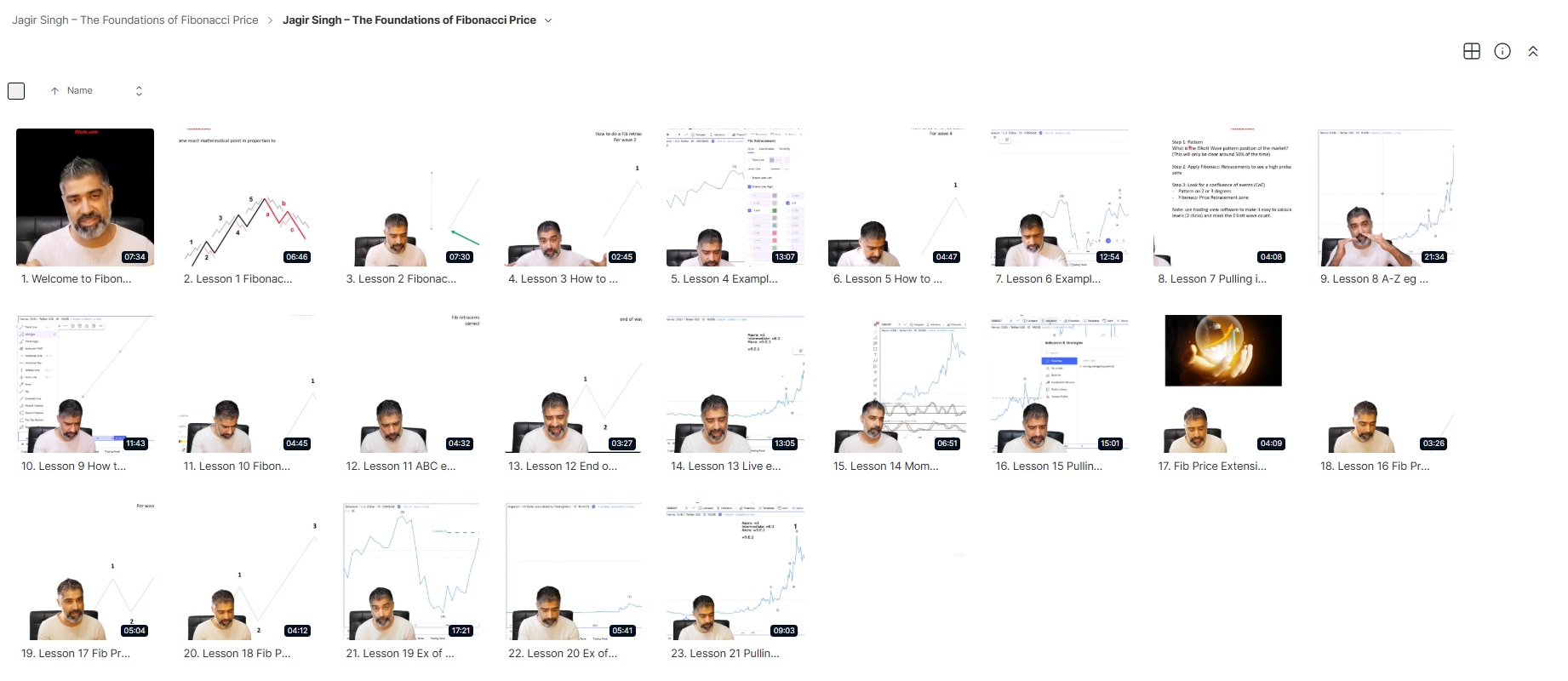
The bedrock of understanding market movements, as revealed through The Foundations of Fibonacci Price, rests upon an appreciation of the inherent order found in both the natural world and human psychology. Jagir Singh’s groundbreaking work, The Fibonacci Foundations of Market Psychology, illuminates how these ancient mathematical sequences offer a profound lens through which to decode the seemingly erratic fluctuations of financial instruments. It’s an assertion that challenges conventional economic thinking by proposing that underlying every price movement is a measurable psychological state, a collective human pulse that beats in predictable, mathematically informed rhythms.
This perspective redefines market analysis, moving it beyond a mere study of supply and demand to a deeper exploration of human sentiment and its quantifiable expression. The very concept that market behavior can be measured with the same precision as natural phenomena is revolutionary, offering traders and analysts a powerful new framework for understanding and predicting market shifts. The universality of Fibonacci ratios, their constant reappearance in everything from the spirals of a seashell to the branching of trees, suggests a fundamental organizing principle at play. When applied to the human domain, particularly the high-stakes environment of financial markets, this principle becomes a potent tool for deciphering the collective psyche of participants.
Thus, The Foundations of Fibonacci Price doesn’t just present a technical indicator; it unveils a philosophical approach to market understanding, one rooted in the deep-seated patterns of the universe itself. It posits that the emotional ebb and flow of fear and greed, optimism and pessimism, which drive market activity, are not random but adhere to an underlying mathematical structure, a structure best articulated through Fibonacci ratios. This profound insight allows for the transformation of subjective market sentiment into objective, quantifiable data points, providing a robust methodology for gauging the pulse of the market with unprecedented clarity. The elegance of this approach lies in its ability to bridge the gap between abstract mathematical concepts and the tangible reality of price action, offering a compelling narrative for how universal laws manifest in human economic endeavors.
Nature’s Mathematical Blueprint
The profound insight at the heart of The Foundations of Fibonacci Price is the undeniable ubiquity of Fibonacci ratios within the natural world. This isn’t a mere coincidence but points to a fundamental organizing principle that transcends specific environments and biological forms. From the spiraling arrangement of seeds in a sunflower to the branching patterns of trees, the unfurling of fern fronds, and even the proportions of a hurricane, these mathematical sequences appear repeatedly, almost as if nature itself is following a pre-programmed blueprint.
This recurring presence suggests an underlying order that provides a compelling basis for applying these very same principles to human-centric systems, such as the complex and often volatile landscape of financial markets. The idea is that if these ratios govern the growth and structure of natural phenomena, there is a strong rationale to consider their influence on human collective behavior, especially when decisions are made under conditions of uncertainty and emotional intensity.
My personal analysis of this phenomenon delves into the concept of emergent complexity. It’s not just that these ratios appear; it’s how they contribute to optimal growth, efficiency, and aesthetic balance in nature. For instance, the Fibonacci spiral in a sunflower maximizes seed packing, ensuring the plant’s reproductive success. This efficiency in the natural world, I believe, translates metaphorically to human systems. When human behavior, particularly in crowd dynamics, aligns with these inherent ratios, it might be an expression of an underlying, perhaps subconscious, drive towards a form of collective efficiency or a shared psychological rhythm. This connection between natural optimization and human market behavior is a fascinating area for further exploration, suggesting that our collective actions, when aggregated, might echo the same principles that govern the most efficient forms in the natural world.
Quantifying Collective Psychology
One of the most radical and transformative aspects of The Foundations of Fibonacci Price, as articulated by Jagir Singh, is the contention that Fibonacci ratios serve as a primary tool for measuring human psychology within financial markets. This isn’t about vague sentiments or anecdotal observations; it’s about transforming the amorphous concept of collective emotion into a quantifiable metric. The document suggests that market movements are not random walks driven by isolated events but rather reflections of collective psychological states that can be precisely quantified.
This idea fundamentally shifts the paradigm of market analysis. Instead of merely reacting to news or earnings reports, analysts can, through the application of Fibonacci ratios, gain insight into the underlying emotional fabric of the market. Key insights into this psychological measurement highlight that human behavior, specifically within the context of market participation, exhibits predictable mathematical relationships. This predictability stems from the premise that because these universal ratios are found in nature, their application to human psychology is framed as a natural extension of universal laws, suggesting an inherent connectedness between the micro-level decisions of individual traders and the macro-level patterns of the cosmos.
My personal take on this revolutionary concept emphasizes the power of collective consciousness. While individual decisions are often rationalized, the aggregation of millions of such decisions, especially under the influence of fear and greed, tends to form patterns. Fibonacci ratios, in this context, act as a kind of mathematical “fingerprint” of this collective consciousness. It suggests that even in moments of irrational exuberance or abject panic, the crowd’s movements are not entirely without order. Rather, they conform to deep-seated, perhaps even archetypal, patterns of human response to stimulus. This perspective opens up a profound avenue for understanding not just what the market is doing, but why it’s doing it, by tapping into the very psychological pulse of its participants.
The Elliott Wave Nexus
The practical application of The Foundations of Fibonacci Price finds its most prominent expression in the relationship between price movements and Elliott Wave Theory. Jagir Singh’s work meticulously details how these mathematical foundations are not just theoretical constructs but have a direct, measurable link to the structure of Elliott waves. This nexus provides the technical mechanism through which the abstract concept of psychological measurement translates into actionable market analysis. It’s in the intricate dance of impulses and corrections, defined by Elliott, that the Fibonacci ratios reveal their predictive power, allowing analysts to quantify market sentiment with remarkable precision.
The document outlines a specific methodology for analyzing market structure, emphasizing the inter-wave relationships. Each individual Elliott wave, whether an impulse or a corrective wave, maintains a specific, measurable relationship to other waves within a sequence. These relationships are not arbitrary; they are measured specifically through Fibonacci price ratios. For example, a common relationship might see a corrective wave retracing a specific Fibonacci percentage of the preceding impulse wave, or an impulse wave extending to a Fibonacci multiple of an earlier wave.
From my analytical perspective, the synergy between Fibonacci ratios and Elliott Wave Theory represents a sophisticated form of pattern recognition. It’s not just about identifying the waves themselves, but understanding the precise proportional relationships that govern their formation. This allows for a deeper layer of market prediction and analysis, enabling analysts to identify the underlying psychological drivers of price action. When a market moves in a manner consistent with established Fibonacci relationships within an Elliott wave structure, it provides a strong indication of the collective psychological state – whether it’s building bullish conviction, consolidating before a new move, or signaling an impending reversal. This technical application, far from being a rigid set of rules, is a flexible framework that allows for nuanced interpretation of market dynamics, grounded in universal mathematical principles and the predictable patterns of human herd behavior.
Jagir Singh
The profound insights we gain into The Foundations of Fibonacci Price are largely attributable to the meticulous research and groundbreaking work of Jagir Singh. His seminal text, The Fibonacci Foundations of Market Psychology, serves as the primary source for understanding how these ancient mathematical sequences are not merely academic curiosities but fundamental drivers of both natural phenomena and, crucially, human behavioral patterns within financial markets. Singh’s contribution lies in his ability to bridge disparate fields – mathematics, natural sciences, and financial analysis – to present a unified theory of market dynamics. He argues convincingly that the recurring presence of Fibonacci ratios across various biological and physical systems points to an underlying order that transcends specific environments.
This universality, he posits, provides a robust basis for applying these same principles to the complex, human-centric systems of financial markets. Through his work, Jagir Singh has provided a coherent framework for measuring human psychology through the structured analysis of Elliott waves, demonstrating that price movements, governed by Elliott wave theory, exhibit specific Fibonacci relationships that allow for the quantification of market sentiment. His research challenges the notion of random market fluctuations, instead presenting a compelling case for an underlying, quantifiable order driven by collective human psychology. This intellectual leap transforms market analysis from a reactive exercise to a more predictive science, rooted in timeless mathematical laws.
Architect of a New Paradigm
Jagir Singh, through his work, has positioned himself as an architect of a new paradigm in financial market analysis. His core contribution is the rigorous articulation of how Fibonacci ratios, typically admired in artistic and natural contexts, possess a profound and measurable relevance to the often-chaotic world of finance. He challenges the prevailing notion that market movements are purely unpredictable or solely driven by fundamental economic data, instead proposing a deeper, more structured order. His research isn’t just about applying a mathematical tool; it’s about fundamentally re-conceptualizing how we perceive and interact with market dynamics.
Singh’s work essentially creates a bridge between the observable patterns of the natural world and the complex, often emotionally charged, decisions made by market participants. He provides a compelling argument that the same universal mathematical principles that govern the growth of a nautilus shell or the arrangement of petals in a flower also underscore the collective psychological ebb and flow that drives price action. This intellectual leap allows for the quantification of market sentiment, transforming subjective human emotions into objective, measurable relationships.
My personal interpretation of Singh’s impact is that he offers a framework that resonates deeply with our innate human desire to find order in chaos. In a world full of uncertainty, the idea that market behavior, driven by human psychology, can adhere to such elegant mathematical precision is both intellectually satisfying and practically empowering. He doesn’t just offer a “how-to” guide for using Fibonacci tools; he provides a philosophical underpinning for why they work, ground them in universal principles that extend far beyond the trading screen. This holistic view elevates market analysis from a purely technical exercise to one that touches upon the very fabric of existence and human nature.
The Quantifiable Nature of Sentiment
One of the most profound takeaways from Jagir Singh’s research is the assertion that human psychology, particularly within the context of market participation, is not only measurable but also exhibits predictable mathematical relationships. This is a radical departure from traditional views that often relegate market sentiment to the realm of subjective feeling or anecdotal observation. Singh’s work grounds this sentiment in the objective reality of Fibonacci ratios, providing a concrete methodology for its quantification. He posits that the collective emotional states – the fear, greed, hope, and despair that drive market booms and busts – are not random but manifest in predictable, proportional patterns.
This quantifiability is a cornerstone of Singh’s contribution to The Foundations of Fibonacci Price. By identifying these patterns, analysts can move beyond merely observing sentiment to actively measuring it, predicting its shifts, and understanding its implications for future price movements. The universal application of these ratios, rooted in their prevalence across natural phenomena, strengthens the argument for their relevance in human psychology. If nature adheres to these laws, then human behavior, as a product of nature, is likely to exhibit similar underlying structures when aggregated into collective action.
From my perspective, this aspect of Singh’s work is incredibly liberating for market participants. It offers a pathway to transcend the emotional roller coaster of trading by providing a rational, mathematical framework for understanding the very emotions that often lead to irrational decisions. By seeing sentiment as quantifiable, traders can develop a more detached and analytical approach, recognizing that even the most fervent booms and busts are likely to unfold within predictable Fibonacci parameters. This doesn’t eliminate emotion from the market, but it provides a powerful tool to measure and anticipate its impact, transforming the often-elusive concept of market psychology into a tangible, actionable component of analysis.
The Elliott Wave & Fibonacci Synthesis
Jagir Singh’s research culminates in a powerful synthesis between Elliott Wave Theory and Fibonacci price ratios, forming the practical cornerstone of The Foundations of Fibonacci Price. He identifies a direct and indispensable link between the structural patterns of price movements, categorized as Elliott waves, and the precise mathematical relationships defined by Fibonacci sequences. This isn’t just an observation; it’s a meticulously detailed framework that allows for the robust analysis of market structure and the prediction of future price action. The beauty of this synthesis lies in its ability to transform the somewhat subjective identification of Elliott waves into a more objective and verifiable process through the application of immutable mathematical proportions.
The document outlines a specific methodology where inter-wave relationships are not merely conceptual but are measured specifically through Fibonacci price ratios. For instance, corrective waves are frequently found to retrace specific Fibonacci percentages (such as 38.2%, 50%, 61.8%) of the preceding impulse wave. Similarly, impulse waves often extend to Fibonacci multiples (like 1.618, 2.618) of previous waves. This intricate network of proportional relationships provides a high degree of confidence in identifying the current wave count and anticipating the likely trajectory of the market.
My analytical insight into this synthesis emphasizes its dual power: it offers both a descriptive and predictive capability. Descriptively, it provides a comprehensive language for understanding the fractal nature of market movements, where patterns repeat at different scales, always adhering to Fibonacci proportionality. Predictively, by applying these ratios to identified Elliott waves, analysts gain a powerful tool for forecasting potential turning points, price targets, and risk management levels. This integrated approach, championed by Jagir Singh, allows market participants to identify the underlying psychological drivers of price action with greater precision, moving beyond simple trend following to a deeper, more structured understanding of the market’s internal rhythm. It provides a roadmap for navigating the complexities of financial markets, grounded in both pattern recognition and universal mathematical truths.
Conclusion
The Foundations of Fibonacci Price, as comprehensively explored by Jagir Singh, posits that Fibonacci ratios are not mere mathematical curiosities but fundamental drivers of both natural phenomena and human behavioral patterns within financial markets. Singh’s research establishes a compelling link between these universal mathematical proportions, the quantifiable nature of human psychology, and the structured analysis of Elliott waves. By demonstrating that price movements exhibit specific Fibonacci relationships, his work provides a robust framework for measuring and understanding collective market sentiment, transforming the seemingly chaotic world of finance into a system governed by discernible, predictable mathematical principles rooted in the very fabric of the natural world.