


The Set and Forget Trading System offers a revolutionary approach to market engagement, promising consistent profitability with minimal daily oversight, fundamentally altering how busy individuals can participate in financial markets.
The Paradigm Shift – Embracing Set and Forget for Sustainable Trading
The conventional wisdom in retail trading often dictates that success is directly proportional to time spent in front of screens, analyzing every tick, and reacting to every market fluctuation. This relentless pursuit of short-term gains, however, frequently leads to emotional exhaustion, burnout, and suboptimal decision-making, particularly for those juggling a full-time career or other significant commitments. The Set and Forget Trading System emerges as a fundamental challenge to this paradigm, positing that true profitability and sustainability lie not in constant activity, but in strategic inactivity and disciplined execution. It champions a “less is more” philosophy, moving away from the frenetic energy of day trading towards a more measured, analytical, and ultimately, less stressful engagement with the markets.
This system is meticulously designed to address the core pitfalls that plague the majority of retail traders: the emotional rollercoaster, the burdensome need to “babysit” trades, and the stark incompatibility of intensive trading with demanding professional lives. By shifting its focus to higher timeframes and embedding a rigorous rule-based execution methodology, the system aims to transform trading from a relentless struggle into a manageable and consistently rewarding endeavor. This isn’t merely a set of strategies; it’s a complete re-envisioning of the trader’s relationship with the market, prioritizing mental well-being and long-term financial growth over fleeting daily adrenaline rushes.
Redefining Trading Efficiency
Traditional trading often equates efficiency with rapid execution and constant market monitoring, leading to a culture where traders feel compelled to be perpetually online, scanning charts, and making split-second decisions. This intense environment, while exhilarating for some, is profoundly inefficient for the vast majority, consuming an enormous amount of time and mental energy for often meager or inconsistent returns. The Set and Forget system radically redefines efficiency, proposing that the most efficient trading is that which requires the least daily input for the greatest possible output. It’s an elegant solution for the modern professional, allowing them to leverage sophisticated strategies without sacrificing their primary responsibilities or personal life. The system’s emphasis on higher timeframes means filtering out the incessant noise of intraday movements, focusing instead on the larger, more significant trends and reversals that offer clearer, more robust trading opportunities. This strategic shift conserves not only time but also cognitive resources, enabling traders to approach the market with a calm, analytical mindset rather than a reactive, emotional one.
This redefinition of efficiency also delves into the psychological aspect of trading. Many traders, driven by a desire for immediate gratification or a fear of missing out (FOMO), fall into the trap of over-trading. Each trade carries transaction costs and exposes capital to risk, and frequent, poorly conceived trades can quickly erode an account. The Set and Forget methodology inherently discourages this by design. By setting trades based on well-defined rules and then stepping away, it forces patience and discipline, two qualities often cited as paramount for trading success but frequently undermined by the fast-paced nature of lower timeframe trading. It teaches traders to trust their analysis and the system’s probabilities, rather than succumbing to the urge to constantly intervene, which often turns winning trades into losing ones or limits potential gains. This approach fosters a healthier, more sustainable relationship with trading, where success is not measured by the number of trades placed, but by the consistent profitability achieved with minimal effort.
Ultimately, the core philosophy of “Efficiency Over Activity” is a powerful counter-narrative to the prevailing day-trading culture. It suggests that by being less active, one can be more effective. This efficiency isn’t about being lazy; it’s about being strategic. It’s about identifying the moments of highest probability, executing with precision, and then allowing the market to do the heavy lifting without constant human interference. For individuals with 9-to-5 jobs or demanding lifestyles, this philosophy is not just appealing but essential. It transforms trading from a second full-time job into a manageable, part-time endeavor that can genuinely contribute to financial independence without requiring an impossible time commitment. The system effectively turns the concept of “time-consuming” into “time-leveraging,” making trading accessible and sustainable for a demographic previously excluded by the demands of conventional trading.
The Psychological Liberation from Market Overload
The constant monitoring required by traditional day trading is not just time-consuming; it’s a significant psychological burden. The need to constantly check charts, track indicators, and make rapid decisions under pressure can lead to high levels of stress, anxiety, and decision fatigue. This mental strain often spills over into personal and professional lives, creating a pervasive sense of being tethered to the market. The Set and Forget system offers a profound psychological liberation, specifically designed to alleviate this burden. By eliminating the necessity for continuous market observation, it frees traders from the mental shackles of market volatility, allowing them to focus on their daily activities without the intrusive pull of worrying about open positions or missed opportunities. Imagine attending a meeting without the urge to discreetly check your phone for market updates, or enjoying a lunch break without rushing back to the screen – this is the freedom the system aims to provide.
This liberation stems directly from the system’s rule-based nature and its “walk away” approach. Once trades are placed according to pre-defined criteria, with predetermined stop-losses and profit targets, the trader is encouraged to disengage. This deliberate act of stepping away is crucial for preventing emotional interference. Many profitable trades are cut short or turned into losses because traders, overwhelmed by fear or greed, prematurely intervene. The system acts as a protective psychological barrier, enforcing discipline by removing the opportunity for emotional, discretionary decisions post-execution. It cultivates patience and trust in the system, teaching traders that sometimes the best action is no action at all. This reduction in the psychological burden is not merely a fringe benefit; it is central to the system’s efficacy, as emotional trading is widely recognized as one of the primary destroyers of trading accounts.
Furthermore, the structure of the set and forget approach inherently reduces stress by providing clarity and predictability. When a trader knows exactly what to look for, how to execute, and when to step away, much of the uncertainty and anxiety associated with trading dissipates. This contrasts sharply with discretionary trading, where every decision can feel like a high-stakes gamble, leading to constant second-guessing and self-doubt. The system’s emphasis on higher timeframes also contributes to this mental calm. Daily charts, for instance, move slower and are less susceptible to the erratic, unpredictable movements seen on lower timeframes, offering a more stable and less overwhelming view of the market. This slower pace allows for more deliberate analysis and calmer decision-making, transforming trading from a source of constant stress into a methodical, almost meditative process that aligns with a balanced lifestyle.
Understanding Market Waves and Reversion Principles
At the heart of the Set and Forget Trading System’s effectiveness is its grounding in fundamental market dynamics: specifically, the principles of market waves and mean reversion. The market does not move in a straight line; instead, it ebbs and flows, creating identifiable patterns of trends (waves) and corrections (reversions). Understanding these underlying forces is critical for developing strategies that can consistently extract profits. The system explicitly leverages these principles, identifying when the market is demonstrating strong directional momentum to ride the trend, and conversely, when it has overextended itself like a “rubber band,” signaling an imminent snap-back or reversion to the mean. This dual approach allows the system to remain adaptable and profitable across various market conditions, rather than being confined to only trending or only ranging environments.
The concept of market waves refers to the observable, often fractal, trending movements of price action. These waves are driven by underlying supply and demand dynamics and represent periods where one side of the market (buyers or sellers) has a clear dominance. Identifying these strong waves early and positioning oneself to ride them for an extended period is a highly profitable strategy.
The Set and Forget system, particularly through its Heiken-Ashi Trend Strategy, is designed to discern the formation and continuation of these powerful trends, enabling traders to enter positions with a high probability of extended movement in their favor. This removes much of the guesswork associated with trend identification, relying instead on clear, quantifiable rules to determine when a wave is strong enough to justify an entry. The insight here is not just that the market trends, but when and how to effectively join these movements without getting caught in short-term noise.
Conversely, the principle of mean reversion, often visualized as a “stretched rubber band,” dictates that prices tend to gravitate back towards their average over time. When a market moves too far too fast in one direction, it becomes statistically probable that it will correct or reverse to some extent. This concept forms the basis of the Ambush Zone Reversion Strategy. By identifying these overextended conditions, where the market has moved significantly away from its mean, the system positions traders to capitalize on the ensuing bounce back.
This requires a different kind of analytical rigor, focusing on indicators and price action that signal an exhausted trend and an impending reversal. The beauty of incorporating both strategies within the Set and Forget framework is that it provides a comprehensive toolkit for market engagement. Whether the market is trending strongly or ripe for a reversal, the system offers a rules-based approach to capitalize, ensuring that the trader is always aligned with significant market movements, regardless of their immediate direction. This holistic understanding and application of market waves and mean reversion are what give the system its robust and consistent performance across diverse market cycles.
Unpacking the Strategic Framework – Two Pillars of Set and Forget Profitability
The efficacy of any trading system is fundamentally rooted in the robustness and adaptability of its underlying strategies. The Set and Forget Trading System distinguishes itself by integrating two distinct yet complementary strategies, ensuring its applicability and profitability across a spectrum of market conditions. These aren’t merely arbitrary methods; they are sophisticated, rules-based frameworks designed to capitalize on specific market behaviors—strong directional trends and predictable mean reversions. This dual-strategy approach eliminates the common trader’s dilemma of needing a separate system for every market phase, instead offering a comprehensive solution that can navigate both trending and ranging environments effectively.
Crucially, both the Heiken-Ashi Trend Strategy and the Ambush Zone Reversion Strategy are built on explicit, verifiable rules, a design choice that purposefully removes the need for discretionary guesswork or extensive personal backtesting by the user. This commitment to rule-based execution is paramount, as it minimizes emotional interference, enhances consistency, and allows traders to apply the strategies with confidence, knowing they are following a proven methodology. The strategic framework is not just about identifying opportunities; it’s about systematizing the process of profit extraction, making it accessible and repeatable for traders of all experience levels, even those with limited time.
The Heiken-Ashi Trend Strategy – Riding the Momentum
The Heiken-Ashi Trend Strategy is the system’s primary tool for capitalizing on strong, sustained directional movements in the market. Unlike traditional candlesticks that show open, high, low, and close for a specific period, Heiken-Ashi candles are designed to smooth out price action, making trends clearer and easier to identify by averaging past price data. This smoothing effect significantly reduces market noise, presenting a more coherent picture of prevailing momentum.
When the market is in a strong wave, characterized by consecutive Heiken-Ashi candles of the same color (e.g., green for an uptrend, red for a downtrend) with little to no lower/upper wicks, the strategy provides clear entry signals. The core idea is to identify these high-conviction trends early and ride them for their duration, capturing substantial profits from extended price movements. This strategy is particularly powerful because it aligns with the fundamental principle that “the trend is your friend,” enabling traders to participate in the most dominant forces within the market.
My personal analysis of trend-following strategies, particularly those employing tools like Heiken-Ashi, suggests that their strength lies in their ability to simplify market interpretation. In a world saturated with complex indicators and conflicting signals, a visual tool that clearly delineates trend strength and direction can be invaluable. The genius of integrating Heiken-Ashi into a Set and Forget context is that once a trend is identified and a trade is placed, the smoothed nature of the candles means there’s less likelihood of being whipsawed out by minor retracements that look significant on traditional charts.
This reinforces the “walk away” principle, as the visual clarity provided by Heiken-Ashi allows traders to trust the trend’s continuation more readily, reducing the urge to constantly monitor or prematurely exit positions. The reported 45.74% cumulative returns over two years for this strategy underscore its effectiveness in steadily growing an equity curve, indicating a robust and reliable method for capturing consistent gains from trending markets.
The application of the Heiken-Ashi Trend Strategy extends beyond mere signal generation; it embodies a disciplined approach to market participation. It teaches traders the virtue of patience—waiting for a clear, strong trend to establish itself—and the wisdom of letting profits run. By focusing on higher timeframes (like daily charts), the strategy inherently filters out much of the short-term volatility that often traps less experienced traders. This means that setups are fewer but of higher quality, leading to a more relaxed trading experience. The strategy’s success is not just about identifying trends, but about managing trades within those trends effectively, using predetermined stop-losses to protect capital and profit targets that align with the expected duration of the trend. This comprehensive approach ensures that traders are not just entering trades, but managing risk and optimizing reward within a well-defined framework, making trend-following a truly sustainable path to consistent profitability under the set and forget umbrella.
The Ambush Zone Reversion Strategy – Capitalizing on Elasticity
In stark contrast to trend following, the Ambush Zone Reversion Strategy is designed to capitalize on periods when the market has become overextended and is due for a snap-back towards its mean. Imagine a rubber band stretched to its limit; eventually, it must revert to its original state. This strategy identifies market conditions where price has moved significantly away from its average, creating an “ambush zone” where a reversal or correction is highly probable. These are typically counter-trend trades, but by focusing on extreme divergences from the mean on higher timeframes, the strategy aims for high-probability reversals rather than trying to pick every minor top or bottom. It requires a keen understanding of market elasticity and the psychological tendencies of traders to push prices too far in one direction before exhaustion sets in. The strategy provides clear, rules-based criteria for identifying these stretched conditions and executing trades to capture the ensuing move back towards the mean.
My personal insights into mean reversion strategies reveal their significant value as a counter-balance to trend-following. While trends offer large potential gains, markets spend a substantial amount of time ranging or correcting. A system that can profitably navigate these environments offers immense versatility. The “Ambush Zone” concept is particularly compelling because it implies a waiting game— patiently observing the market as it stretches, then pouncing when the conditions for reversal are optimal.
This waiting period inherently aligns with the Set and Forget philosophy, as it discourages impulsive entries and encourages a methodical, disciplined approach. The strategy is often described as “boring but steady and profitable,” a descriptor that perfectly encapsulates the ideal set and forget trade: not flashy, but consistently contributing to the bottom line with minimal drama. The reported 40.58% cumulative returns for this strategy over two years validate its efficacy in identifying and profiting from these elastic market movements, demonstrating its capacity to deliver consistent gains even in non-trending markets.
The implementation of the Ambush Zone Reversion Strategy requires precision in identifying the “ambush zone” itself. This involves specific technical criteria that signal an extreme overextension, rather than just a minor pullback. By waiting for these confluence of signals, the strategy minimizes the risk inherent in counter-trend trading. Furthermore, like its trend-following counterpart, this strategy benefits from higher timeframe analysis. Daily charts are less prone to the false signals and rapid whipsaws that can plague mean reversion attempts on lower timeframes.
The system emphasizes clear entry points, strict stop-loss placement, and realistic profit targets that account for the nature of mean reversion—often aiming for a return to a specific average level rather than an unlimited continuation. This disciplined approach to both entry and exit management ensures that traders are not only identifying high-probability reversals but also managing the associated risks effectively, making the Ambush Zone Reversion Strategy a powerful and complementary pillar within the Set and Forget framework, ensuring profitability regardless of the prevailing market sentiment.
Operational Modes – Hands-Off vs. Semi-Active Engagement
The Set and Forget Trading System recognizes that while its core philosophy is about minimal daily time investment, traders have varying preferences for interaction with their open positions. To accommodate this spectrum, the system offers two distinct operational modes: the purely Hands-Off Approach and the more flexible Semi-Active Approach. This adaptability is a key strength, ensuring that the system can cater to different personality types, risk tolerances, and daily schedules, without compromising its underlying principles of efficiency and rule-based execution.
It underscores the system’s commitment to providing a practical solution for a diverse range of traders, from those who genuinely cannot dedicate more than a few minutes a day to their trading, to those who prefer a little more control and engagement without falling back into the trap of over-management. This thoughtful design ensures that the system is not a one-size-fits-all straitjacket, but a versatile tool adaptable to individual needs.
The Hands-Off Approach is the purest embodiment of the set and forget philosophy. For traders who truly wish to minimize their daily involvement, this mode is ideal. The process is straightforward: in the morning, after identifying a high-probability setup using the system’s rules, the trader places the trade with pre-defined entry points, stop-losses, and profit targets. Once these parameters are set, no further interaction is required for the rest of the day, or even for several days, depending on the timeframe and strategy.
This mode is perfect for individuals with extremely demanding jobs, those in different time zones, or anyone who simply prefers to detach from the market’s hourly fluctuations. The psychological benefit here is immense; by making the decision to completely step away, traders prevent themselves from falling into the trap of emotional intervention, allowing the system’s probabilities to play out unhindered. This mode requires a high degree of trust in the system and a strong commitment to disciplined non-intervention, but for those who embrace it, it offers unparalleled freedom and peace of mind.
For traders who desire a bit more interaction without reverting to intensive screen time, the Semi-Active Approach provides a balanced alternative. This mode allows for occasional check-ins throughout the day—perhaps a few times during designated breaks—to perform specific, predefined actions. These actions might include trailing stop-losses to lock in profits as a trade moves favorably, tightening risk by moving a stop-loss to break-even, or making adjustments based on a pre-established set of rules for managing open positions. Crucially, even in this semi-active mode, the decisions are still rule-based, preventing discretionary guesswork.
The intent is not to react to every price swing, but to strategically manage risk and optimize profit capture at key junctures. This mode offers a compromise: more control than the hands-off approach, but still significantly less intensive than traditional day trading or scalping. It caters to traders who appreciate the peace of mind of the set and forget methodology but also enjoy the psychological comfort of periodically reviewing and managing their positions, offering a flexible path to consistent profitability within the system’s framework.
The Daily Workflow – Standardizing Success with Set and Forget Principles
The success of the Set and Forget Trading System is not merely attributed to its robust strategies but equally to its meticulously standardized daily workflow. This operational methodology is deliberately structured to eliminate ambiguity, minimize subjective decision-making, and, most critically, prevent emotional interference—the perennial bane of retail traders. By establishing a clear, repeatable routine, the system transforms trading from a chaotic, reactive activity into a disciplined, predictable process.
This standardization ensures that every trader, regardless of their experience level, can consistently apply the system’s principles, fostering a sense of control and reducing the anxiety often associated with financial markets. The workflow is streamlined for efficiency, requiring only a small window of time each morning, making it perfectly compatible with busy professional and personal lives. This consistent adherence to a predefined set of actions is what allows the system to deliver its promise of consistent profitability with minimal daily effort, turning complex market dynamics into a manageable, step-by-step procedure.
The Morning Ritual – Precision in Setup Identification
The cornerstone of the set and forget daily workflow is the morning ritual of setup identification. This is the critical period where a small, focused window of time—typically 15 to 30 minutes—is dedicated to analyzing the market through the lens of the system’s rules. Traders are guided to identify high-probability setups that align with either the Heiken-Ashi Trend Strategy or the Ambush Zone Reversion Strategy. This isn’t about aimless chart-gazing; it’s a precision operation where specific criteria must be met for a setup to be considered valid. The process involves confirming market direction, assessing trend strength or mean reversion potential, and identifying the precise entry points based on the system’s defined rules. The beauty of this ritual lies in its objective nature; there’s no need for discretionary “feeling” or subjective interpretation. If a setup meets all the specified conditions, it’s a valid trade; if not, the trader simply waits for the next opportunity.
My personal analysis of such morning routines highlights their immense psychological benefits. By confining analysis to a specific, limited timeframe, traders avoid the temptation to constantly check charts throughout the day, which often leads to analysis paralysis or impulsive decisions. This structured approach builds discipline and patience, qualities that are far more valuable than raw market knowledge. Furthermore, the focus on higher timeframes during this morning scan means that signals are clearer and less prone to the rapid reversals seen on intraday charts. This clarity reduces stress and increases confidence in the identified setups. The system actively promotes this focused morning assessment as a means to filter out market noise, ensuring that only the most robust and high-probability opportunities are considered, thereby optimizing the chances of a successful trade without consuming excessive daily time.
The precision in setup identification is also a direct reflection of the system’s commitment to mitigating risk. By waiting for specific, high-conviction signals, traders are entering positions where the statistical edge is demonstrably in their favor. This contrasts sharply with speculative entries based on intuition. The morning ritual, therefore, is not just about finding trades; it’s about finding quality trades that align with a predefined risk-reward profile. The comprehensive training provided within the program ensures that traders are fully equipped to perform this morning analysis correctly, teaching them exactly what to look for and how to interpret the signals from both strategies. This systematic approach to setup identification transforms what can often be an overwhelming task into a clear, manageable, and highly effective starting point for the trading day, reinforcing the core principles of consistent profitability through disciplined application.
Execution and The Walk Away Rule – Trusting the System
Once a high-probability setup has been identified during the morning ritual, the next critical step in the set and forget workflow is execution, followed immediately by the strict adherence to “The Walk Away Rule.” Execution within this system is not a moment of hesitation or second-guessing; it’s a confident, rule-based action. Traders place their orders with predetermined entry points, precise stop-losses to protect capital, and clear profit targets. These parameters are not arbitrary; they are derived directly from the system’s strategic rules, ensuring that each trade is thoughtfully planned in terms of risk and reward before it is even activated. This pre-planned approach eliminates the common pitfall of making emotional adjustments to trades after they have been entered, a behavior that often turns potential winners into losers. The emphasis is on mechanical execution based on objective criteria, removing the subjective and often detrimental influence of human emotion.
The true genius and defining characteristic of the system comes into play immediately after execution: The Walk Away Rule. Once the trade is placed with its protective stop-loss and profit target, the trader is explicitly instructed to exit the platform, disengage from the charts, and let the market do its work. This rule is more than just a suggestion; it’s a fundamental tenet of the Set and Forget philosophy. It directly combats the pervasive urge to “babysit” trades, which almost invariably leads to over-management, premature exits, or panicked interventions. By physically and mentally stepping away, traders prevent themselves from being swayed by every minor market fluctuation, which, on higher timeframes, is largely noise. This act of stepping away is a powerful psychological tool, fostering patience and trust in the system’s inherent probabilities and the market’s natural progression towards the predetermined targets or stops.
My personal reflection on The Walk Away Rule emphasizes its profound impact on trading psychology. Many traders find it incredibly difficult to relinquish control once a trade is live, constantly checking their positions, feeling the anxiety of drawdowns, or the urge to “lock in” small profits too early. The Walk Away Rule forces a necessary detachment, allowing the trade to unfold without the trader’s emotional interference. This detachment is crucial for allowing profitable trends or reversals to reach their full potential. It reinforces the idea that the analysis and planning were done before the trade, and after execution, the best course of action is often inaction. This rule transforms trading from an emotionally draining activity into a passive investment in a pre-calculated probability, enabling the trend or reversal to perform the “heavy lifting” without the constant burden of human oversight. It’s a testament to the system’s design that it not only provides entry and exit mechanics but also dictates the psychological framework necessary for consistent success.
Timeframe Focus and Historical Win Rates
A pivotal element of the Set and Forget Trading System’s operational methodology is its unwavering focus on higher timeframes, predominantly daily charts. This strategic choice is fundamental to the system’s ability to filter out market noise, identify clearer setups, and facilitate the “walk away” approach. Lower timeframes (e.g., 5-minute, 15-minute charts) are characterized by volatile, often erratic price movements that generate numerous false signals and create an environment ripe for emotional decision-making and over-trading. By contrast, daily charts present a more consolidated and reliable view of market sentiment and directional bias. Each candle on a daily chart represents a full day’s worth of trading activity, making the trends and reversals identified far more significant and less susceptible to short-term manipulation or random fluctuations. This focus on the “big picture” allows traders to discern the underlying market dynamics with greater clarity and confidence.
My personal analysis indicates that the shift to higher timeframes is a game-changer for many struggling retail traders. It forces a slower, more deliberate pace of analysis, reducing the pressure to make instantaneous decisions. This deliberate pace aligns perfectly with the set and forget philosophy, as it means fewer but higher-quality trading opportunities. A daily chart signal, by its very nature, is more robust than an intraday signal, implying that once a trade is entered, it has a greater probability of following through over an extended period. This extended follow-through is what enables the system’s “walk-away” approach, as minor intraday price swings are unlikely to invalidate a higher timeframe setup. The system effectively trains traders to become strategists rather than reactive scalpers, focusing on the macro movements that offer the most substantial and sustainable profits.
The benefits of this timeframe focus are powerfully underscored by the reported historical win rate of approximately 80% for the lead developer. While individual results may vary, such a high win rate for a long-term system is remarkable and speaks volumes about the quality of the setups identified on higher timeframes. This high win rate is not just a statistical anomaly; it is a direct consequence of the system’s design: filtering for strong, unambiguous signals, reducing noise, and eliminating emotional interference. A high win rate, combined with a disciplined risk management framework, is a powerful recipe for consistent profitability. It provides traders with the confidence to trust the system, even during inevitable losing streaks, understanding that the overall probabilities are heavily weighted in their favor. The timeframe focus, therefore, is not merely a technical choice; it is a foundational pillar that supports the entire structure of the Set and Forget Trading System, enabling both its unique operational methodology and its impressive track record of success.
Tangible Results and Empowering the Modern Trader
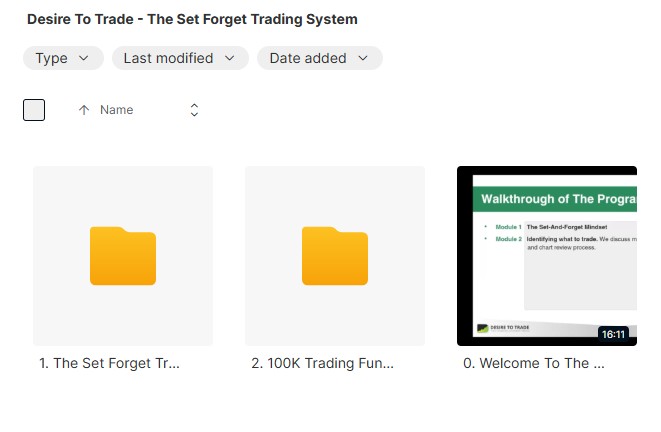
The true measure of any trading system lies not just in its theoretical framework, but in its tangible, verifiable results and its capacity to empower individual traders. The Set and Forget Trading System doesn’t shy away from presenting evidence of its efficacy, backing its claims with concrete performance data and compelling success stories from its student community. This transparency is crucial for building trust and demonstrating that its promise of consistent profitability with minimal time investment is not an empty one. The system presents internal model results over a significant two-year period, illustrating the consistent growth achievable through its distinct strategies. Beyond internal metrics, it highlights the real-world impact on its users, showcasing how individuals from various backgrounds have successfully integrated the set and forget approach into their lives. Furthermore, the comprehensive program components are designed to bridge the gap between theoretical knowledge and practical application, providing a complete ecosystem for a trader’s journey from novice to proficient, ensuring that the system is not just a collection of strategies, but a pathway to sustainable financial independence.
Performance Metrics – Quantifying Set and Forget Success
The most compelling evidence for the Set and Forget Trading System’s effectiveness comes from its robust performance metrics, specifically the two-year cumulative returns of its core strategies. These figures provide a clear, quantifiable illustration of the system’s profitability and consistency, moving beyond anecdotal claims to objective data. The Heiken-Ashi Trend Strategy, designed to capitalize on strong market waves, demonstrated a cumulative return of 45.74% over a 24-month period. This translates to an
Tangible Results and Empowering the Modern Trader
The true measure of any trading system lies not just in its theoretical framework, but in its tangible, verifiable results and its capacity to empower individual traders. The Set and Forget Trading System doesn’t shy away from presenting evidence of its efficacy, backing its claims with concrete performance data and compelling success stories from its student community. This transparency is crucial for building trust and demonstrating that its promise of consistent profitability with minimal time investment is not an empty one. The system presents internal model results over a significant two-year period, illustrating the consistent growth achievable through its distinct strategies. Beyond internal metrics, it highlights the real-world impact on its users, showcasing how individuals from various backgrounds have successfully integrated the set and forget approach into their lives. Furthermore, the comprehensive program components are designed to bridge the gap between theoretical knowledge and practical application, providing a complete ecosystem for a trader’s journey from novice to proficient, ensuring that the system is not just a collection of strategies, but a pathway to sustainable financial independence.
Performance Metrics – Quantifying Set and Forget Success
The most compelling evidence for the Set and Forget Trading System’s effectiveness comes from its robust performance metrics, specifically the two-year cumulative returns of its core strategies. These figures provide a clear, quantifiable illustration of the system’s profitability and consistency, moving beyond anecdotal claims to objective data. The Heiken-Ashi Trend Strategy, designed to capitalize on strong market waves, demonstrated a cumulative return of 45.74% over a 24-month period. This translates to an impressive annualized return rate that many investors would envy in a traditional investment landscape.
This performance metric not only represents raw numbers but also encapsulates several underlying principles of successful trading. It highlights the strategic approach of identifying strong trends and allowing them to unfold over time. The notion of compounding returns is evident as well; as profits are reinvested, the effects of time work in favor of the investor. A consistent strategy like Heiken-Ashi, which filters out noise and provides clear buy or sell signals, enables traders to stick to their plans without succumbing to anxiety about market fluctuations that often lead to poor decision-making. This foundational success story serves to validate the set and forget methodology, lending credibility to the idea that disciplined trading can yield favorable outcomes.
Moreover, the system’s record of performance is not solely reliant on positive trades; it also integrates sound risk management principles that safeguard the trader’s capital. Each trade is approached with a well-defined risk-reward ratio, ensuring that even amid inevitable losses, the overall portfolio can remain profitable over the long term. This preemptive mindset fosters a cultivation of patience. Success in trading pivots upon a balance of calculated risks and rewards, underscoring why tangible results are not just about winning trades but managing overall equity health effectively.
User Testimonials – Real Stories of Transformation
The statistical success of the Set and Forget Trading System is further amplified by the real-life experiences of its users. The testimonials from traders who have undergone the program underscore its profound impact on their lives, offering a narrative that resonates more deeply than data alone. Many students arrive with varying levels of experience, often frustrated by a history of emotional trading and poor results. Yet, they find a sense of empowerment and clarity in the structured approach provided by the system.
One such testimonial comes from a former teacher who transitioned into trading full time after discovering the set and forget strategy. Initially skeptical of claims of a straightforward trading methodology, their journey soon transformed into one of self-confidence and financial independence. They remarked on how the system not only taught them to make informed trading decisions but also encouraged a profound mindset shift from reactive trading to proactive strategy development. It was this empowerment that changed their relationship with financial markets, allowing them to see trading as a means of reinforcing their values of discipline and integrity.
Additionally, another user detailed how the system enabled him to reclaim his time, originally lost to the frantic pace of day trading. With newfound clarity and purpose, he entered trades with the expectation of longer time horizons and stepped back to let the market reveal its course. The freedom to focus on family and other hobbies was a game-changer, inspiring others to view trading not merely as a source of income but as an opportunity for enhanced quality of life.
These testimonials reveal how the set and forget framework fosters not only trading success but also personal growth. It highlights the notion that the system serves as both an operational plan and a transformational experience, allowing traders to take ownership of their financial futures with confidence and serenity.
Embracing Automation and Advanced Tools
As technology has progressed, traders now have unprecedented access to advanced tools and automation capabilities that enhance their trading experience. The Set and Forget Trading System integrates these technological advantages seamlessly, offering users the opportunity to capitalize on market movements without the need for constant monitoring. It recognizes that the modern trader, often juggling multiple responsibilities, can benefit immensely from a well-designed system capable of execution without supervision.
The Role of Automation in Trading Strategy
One of the largest advantages conferred by the Set and Forget Trading System is its ability to harness automation to manage trades effectively. Traders can utilize algorithmic tools that monitor market conditions, trigger purchases, or set stop-loss orders based on prevailing signals. This functionality is indicative of a paradigm shift—the need to adapt to a fast-paced environment while maintaining the core tenets of disciplined trading.
The combination of automation and the set and forget philosophy empowers users to engage with the markets with less emotional volatility. Traders can establish predefined parameters for their trades, eliminating the pressure linked to real-time decision-making. By programming a strategy that automatically identifies and executes trades based on pre-approved setups, users can focus on learning and refining their analytical skills while gaining the advantages of participating in the financial markets.
Moreover, the incorporation of advanced trading software permits deep analysis of potential setups and the testing of historical data to create personalized strategies. This analytical capability allows users to become more attuned to the unique specifications of their trading preferences. Consequently, once they become comfortable with their methodologies, they can confidently step back, relying on technology to execute on their behalf.
Tools for Data Analysis and Empowerment
The realm of data analytics has transformed trading in unprecedented ways. The Set and Forget Trading System offers a suite of tools designed to provide meaningful insights alongside actionable intelligence. These tools equip traders with robust market analysis abilities, enabling them to understand patterns, track economic indicators, and evaluate broader market sentiment effectively.
For instance, many platforms today come with integrated dashboards that present performance in real-time, alongside features that allow users to backtest their strategies against historical data. This empowers them to refine their approaches based on real-world market volatility. The power of such analytics not only inspires confidence but propels traders to continue honing their skills, exploring new ideas and adapting their methodologies.
Furthermore, online trading communities foster connections where like-minded individuals share insights and resources. A powerful aspect of the Set and Forget Trading System is its commitment to developing a supportive environment that encourages knowledge sharing and continuous improvement. This networking provides users with the glue that binds theoretical knowledge to practical market experience, ensuring they are well-equipped to navigate diverse trading conditions.
Conclusion
The Set and Forget Trading System stands as a testament to the evolution of trading methodologies, emphasizing the importance of automation, higher timeframe focus, and user empowerment as critical tenants for modern success in the financial markets. With a robust data-backed history of significant returns, real-world transformations, and the integration of technology and community into its fabric, it offers a transformative approach that demystifies trading for individual investors. By aligning with the principles of disciplined practice and analytical insight, traders can pursue a sustainable path toward financial independence, devoid of the emotional rollercoaster typically associated with trading, ultimately showcasing that consistent success stems from both an artful strategy and the courage to embrace a new mindset.
Sales Page:_https://app.desiretotrade.com/set-and-forget-trading-system