
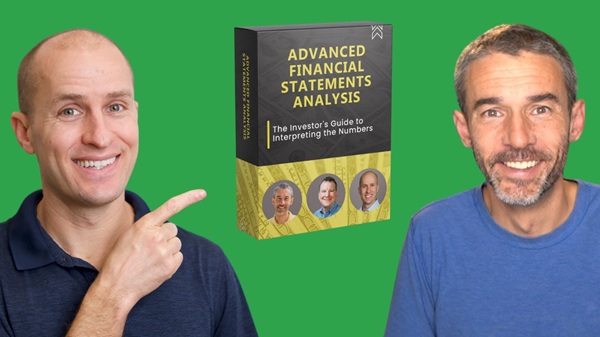
Understanding advanced financial statement analysis is crucial for anyone looking to transition from an intermediate investor to a professional-level analyst, interpreting complex data through the lens of business lifecycles, cash dynamics, and capital efficiency. This specialized curriculum offers a comprehensive framework to dissect financial statements, not just for compliance, but for deep strategic insight and informed decision-making.
Unlocking Business Insights – The Growth Cycle and Valuation Mastery
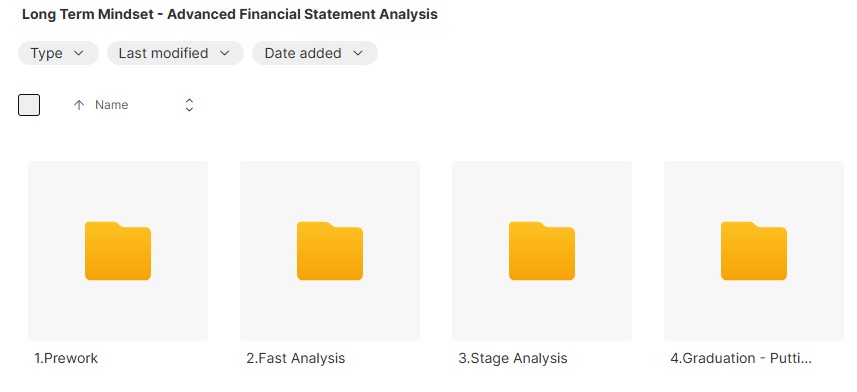
The journey into advanced financial statement analysis begins with a fundamental understanding that not all businesses are created equal, nor should they be analyzed with a one-size-fits-all approach. A company’s life stage profoundly dictates its operational characteristics, financial metrics, and, critically, the most appropriate valuation methodologies. This sophisticated perspective moves beyond static balance sheets and income statements, viewing a business as a dynamic entity evolving through distinct phases, each presenting unique challenges and opportunities for the astute analyst. It’s about discerning the underlying narrative of growth, maturity, or decline that the raw numbers often obscure, enabling a more nuanced and accurate assessment of a company’s true potential and intrinsic value.
Navigating the Six Stages of Business Growth
The six-stage business growth cycle is a central pillar of this analytical framework, providing a critical lens through which to interpret financial data. Learning to accurately identify which of these six phases a business occupies is paramount, as it directly influences the relevance and weight of various financial metrics. A startup, for instance, will be judged very differently from a mature, cash-generating conglomerate; applying the wrong set of expectations or metrics can lead to significant misjudgments in valuation and risk assessment.
Beyond mere identification, the curriculum emphasizes metric alignment – pinpointing the specific key metrics that carry the most weight during each particular stage of growth. For a nascent company, metrics like customer acquisition cost, burn rate, and total addressable market (TAM) might be far more indicative of future success than traditional profitability ratios. Conversely, for a mature, established enterprise, free cash flow generation, dividend sustainability, and return on invested capital (ROIC) would take precedence. This dynamic approach ensures that the analysis remains relevant and insightful, providing a robust foundation for advanced financial statement analysis.
Advanced Valuation Models – Beyond Basic Ratios
Moving beyond foundational ratios, the program delves into a broad spectrum of advanced valuation tools, equipping practitioners to tackle complex scenarios. While common multiples like Price-to-Earnings (P/E), Price-to-Sales (P/S), and Price-to-Free-Cash-Flow (P/FCF) are covered for their calculation and limitation analysis, the emphasis shifts to understanding their applicability within the context of the business growth cycle and industry specifics. A high P/E ratio, often seen as a red flag, might be perfectly justified for a rapidly growing tech company in its expansion phase, whereas the same ratio for a stagnant utility company could signal overvaluation.
Moreover, the curriculum extends to sophisticated Venture Capital methods, which employ big-picture metrics such as Total Addressable Market (TAM) and Serviceable Addressable Market (SAM) to gauge future potential, especially critical for early-stage or high-growth ventures with limited historical financial data. The Discounted Cash Flow (DCF) model receives a deep dive, exploring standard approaches, their inherent drawbacks, and an innovative inverted DCF approach. This inverted method starts with the current stock price to solve for market expectations, providing a powerful tool to understand the embedded assumptions in a company’s valuation and to identify discrepancies or mispricings that traditional DCF models might miss. This holistic approach to valuation is a hallmark of truly advanced financial statement analysis.
The Pulse of Progress – Cash Dynamics and Risk Identification
A critical component of advanced financial statement analysis is the deep understanding of a company’s cash dynamics, an often-overlooked aspect overshadowed by top-line growth or reported profits. The curriculum forcefully argues that growth, while seemingly positive, does not always equate to financial health. Many rapidly expanding businesses can quickly burn through cash, creating a dangerous illusion of success. This section dissects the intricate flow of cash within an organization, highlighting how operational decisions, strategic investments, and even external market conditions can dramatically impact liquidity and long-term viability. It’s about peering beyond the accrual-based accounting to understand the actual inflow and outflow of money, which is the lifeblood of any enterprise.
Cash Conversion Cycle and Growth’s True Cost
The cash conversion cycle is scrutinized in detail, offering a deep dive into how effectively a business manages its cash from the moment it invests in inventory or raw materials until it collects cash from sales. Understanding the timing of cash flows is paramount; a business might be profitable on paper, but if its cash is tied up in accounts receivable or excessive inventory, it can face severe liquidity crises. This analysis allows investors and executives to identify inefficiencies, such as long collection periods or slow inventory turnover, which can stifle growth or even lead to insolvency, irrespective of reported earnings.
The dynamic between cash creation and consumption is another vital area of focus, specifically evaluating how rapid growth can either generate liquidity or deplete it. While growth is generally desirable, aggressive expansion often requires significant upfront investment in assets, marketing, and working capital, which can lead to substantial cash outflow in the short term. The program teaches practitioners to differentiate between sustainable, cash-generative growth and growth that acts as a cash sink, requiring continuous external funding. This distinction is critical for advanced financial statement analysis, allowing for a more realistic assessment of a company’s financial resilience and its ability to fund future expansion without undue reliance on debt or equity issuances.
Detecting Yellow and Red Flags – Early Warning Systems
Special attention is given to high-risk scenarios and the crucial ability to identify potential failures before they manifest into irreversible problems. This proactive approach is a cornerstone of advanced financial statement analysis, moving beyond historical reporting to predictive insights. Analyzing unprofitable entities, for example, involves predicting how such companies will successfully raise future capital to sustain operations and eventually achieve profitability, or conversely, identifying when their funding runway is unsustainable. This often requires assessing market sentiment, investor appetite, and the company’s strategic pivots.
Mastering the detection of yellow and red flags is a key takeaway, providing practitioners with an arsenal of indicators that signal underlying business instability or poor investment quality. These flags can range from deteriorating cash flows from operations despite revenue growth, to excessive debt accumulation, aggressive accounting practices, or frequent changes in key management. The curriculum teaches how to connect these disparate pieces of information, forming a comprehensive picture of a company’s health. Identifying these early warning signs allows investors to avoid significant losses and allows executives to preemptively address fundamental operational or financial issues, transforming financial analysis from a mere reporting function into a powerful risk management tool.
Stewardship of Capital – Evaluating Management Performance
At the heart of advanced financial statement analysis lies the profound insight that a company’s financial performance is inextricably linked to the quality and effectiveness of its management. The curriculum posits that capital allocation is not merely a task but the CEO’s primary responsibility, a strategic imperative that dictates the long-term value creation for shareholders. It’s about understanding how management deploys every dollar of capital—whether generated internally or raised externally—to achieve the best possible returns. This goes beyond looking at revenue or profit growth in isolation; it delves into the efficiency and wisdom behind every investment, acquisition, and operational decision, recognizing that even profitable ventures can destroy value if capital is not allocated effectively.
Capital Allocation – A CEO’s Ultimate Responsibility
The program meticulously examines how management’s decisions regarding capital allocation directly impact a company’s financial health and future prospects. This involves a deep dive into how capital is raised, invested, and returned to shareholders. For instance, a CEO might choose to reinvest profits back into the business for expansion, acquire other companies, pay down debt, or return capital to shareholders through dividends or share buybacks. Each choice has profound implications for financial statements and shareholder value. Advanced financial statement analysis empowers practitioners to critically assess these decisions, determining if capital is being deployed in a manner that maximizes long-term returns or if it’s being squandered on unproductive ventures.
Furthermore, the curriculum explores the long-term mindset required for effective capital allocation, moving beyond short-term quarterly results to focus on sustainable value creation. It highlights the importance of management having a clear and consistent capital allocation strategy that aligns with the company’s competitive advantages and business growth stage. An investor or executive learning this framework gains the ability to scrutinize management’s track record, evaluate their strategic foresight, and hold them accountable for their stewardship of the company’s resources. This perspective transforms financial analysis from a retrospective exercise into a forward-looking assessment of leadership quality and strategic execution.
Advanced Profitability and Efficiency Metrics
To objectively evaluate management’s effectiveness in capital allocation and overall operational performance, the program utilizes a suite of advanced profitability and efficiency metrics that go far beyond basic net income. These metrics provide a more holistic view of how efficiently a company uses its assets and capital to generate returns. Return on Equity (ROE) measures profitability in relation to shareholder equity, indicating how much profit a company generates for each dollar of shareholders’ investment. While a high ROE is generally desirable, the curriculum teaches how to dissect its components (profit margin, asset turnover, financial leverage) to understand if it’s driven by genuinely efficient operations or excessive debt.
Return on Assets (ROA) evaluates how efficiently a company uses its assets to generate earnings, providing insight into management’s ability to maximize productivity from its resource base. More comprehensively, Return on Invested Capital (ROIC) assesses the return generated on all capital (both debt and equity) invested in the business, making it arguably the most robust metric for evaluating management’s effectiveness in deploying capital. ROIC is particularly powerful because it considers all suppliers of capital and indicates how well a company is generating returns above its cost of capital. By mastering these advanced metrics, practitioners gain the tools for sophisticated financial statement analysis, enabling them to identify companies with superior management and sustainable competitive advantages, thereby accelerating career progression and investment efficacy.
Strategic Application – Accelerating Career and Investment Efficacy
The ultimate goal of this comprehensive curriculum is not merely to impart academic knowledge but to fundamentally transform how individuals approach financial data, accelerating their career progression and enhancing investment efficacy. It recognizes that in today’s fast-paced business environment, the ability to interpret complex financial statements with speed and precision is an invaluable skill, distinguishing professional analysts from mere data readers. This section emphasizes the practical application of the learned methodologies, demonstrating how demystifying financial data translates into tangible benefits for a diverse range of professionals, fostering a long-term mindset crucial for sustained success.
Elevating Interpretive Skills for Diverse Professionals
The curriculum is meticulously structured to serve three distinct professional archetypes, each with unique needs but a shared objective of elevating their financial interpretative skills. Intermediate Investors are guided to transcend basic analysis, honing their capabilities to meet professional analyst standards. This involves moving beyond surface-level ratios to understanding the underlying business dynamics and strategic implications of financial figures. For Executives and Professionals, the program offers a pathway to refine their financial analysis capabilities for robust corporate application, enabling them to make more informed strategic decisions, evaluate projects critically, and communicate complex financial concepts with authority.
Entrepreneurs, often needing to wear many hats, gain the objective perspective of an external investor, empowering them to evaluate their own operations with renewed clarity. This enables them to identify their business’s strengths and weaknesses from a financial standpoint, anticipate investor questions, and strategically position their companies for growth and funding. By providing a common, rigorous framework for advanced financial statement analysis, the program ensures that all participants can speak the language of finance with fluency and depth, bridging the gap between raw data and actionable strategic insight, irrespective of their primary professional role.
Demystifying Complex Data – Speed and Precision
A core objective of the program is to demystify complex financial data, transforming what often appears as an impenetrable thicket of numbers into a clear narrative of business performance and potential. This is achieved by teaching practitioners how to find, read, and interpret statements with unparalleled speed and precision. Rather than rote memorization of accounting rules, the focus is on understanding the fundamental principles and the strategic choices that shape the numbers, allowing for rapid assimilation and critical evaluation. The instructional expertise of seasoned financial educators, Brian Feroldi and Brian Stoffel, plays a crucial role here, with their extensive backgrounds in investment journalism and financial analysis enabling them to simplify intricate concepts.
Their approach, rooted in demystifying the stock market for the general public and applying antifragile principles, provides a practical, real-world perspective. This expertise helps participants develop an intuitive understanding of financial statements, allowing them to quickly identify key trends, anomalies, and critical information without getting bogged down in minutiae. The ability to perform advanced financial statement analysis swiftly and accurately is not just a time-saver; it’s a competitive advantage, enabling quicker decision-making in dynamic market conditions and fostering a proactive rather than reactive investment or management strategy.
Conclusion
The specialized curriculum on advanced financial statement analysis serves as a comprehensive bridge for intermediate investors, executives, and entrepreneurs, guiding them towards professional-level analytical proficiency. By emphasizing a long-term mindset and moving beyond basic accounting, the program rigorously explores business lifecycles, cash dynamics, and capital efficiency. Graduates master the six stages of business growth, apply diverse valuation models from Venture Capital to Discounted Cash Flow, and become adept at the rigorous analysis of capital allocation, all while learning to identify critical yellow and red flags that signal instability or poor investment quality. This holistic approach, imparted by experienced financial educators, empowers practitioners with the tools to evaluate management performance through advanced metrics like ROE, ROA, and ROIC, ultimately demystifying complex financial data to accelerate career progression and enhance investment efficacy with speed and precision.
Sales Page:_https://www.longtermmindset.co/courses/advanced-financial-statement-analysis