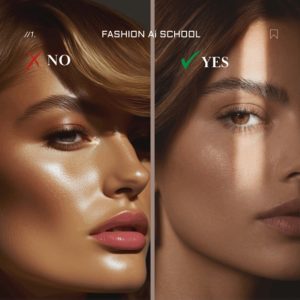
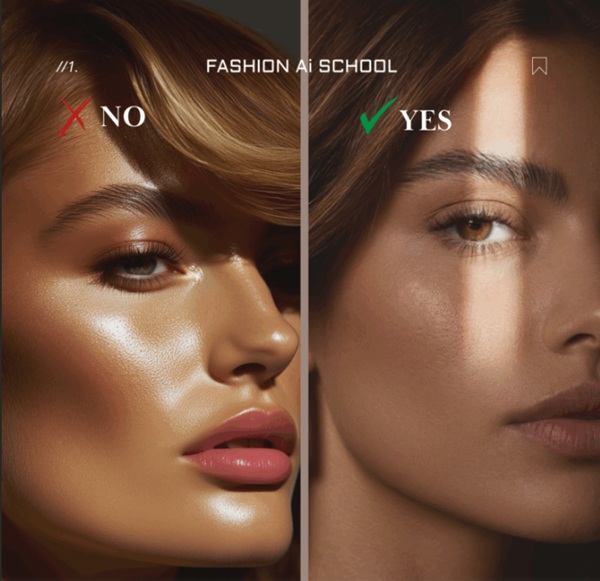
The AI Hyperrealism in Fashion Workshop is at the forefront of a paradigm shift, moving the fashion industry from generic, “plastic-looking” AI visuals to a new standard of authentic, digitally crafted hyperrealism.
AI Hyperrealism in Fashion Workshop

The fashion industry stands at a pivotal moment, with the pervasive, often criticized, “AI-look” of past digital imagery giving way to an unprecedented demand for hyperrealistic visuals. This profound transition is not merely a stylistic preference but a strategic imperative driven by brands seeking genuine aesthetic appeal and audience trust. The core of this evolution lies in the ability to render natural skin textures, intricate fabric weaves, and realistic light behavior, elements that were once the exclusive domain of professional photography. This movement champions visuals that are virtually indistinguishable from real-world photography, fundamentally transforming how fashion content is created, consumed, and monetized. The principles of the AI Hyperrealism in Fashion Workshop underscore this shift, emphasizing the practical application of advanced AI workflows to achieve these high-fidelity results, democratizing access to cutting-edge visual production without the traditional barriers of extensive technical expertise or prohibitive costs.
The Evolution from Synthetic to Hyperreal
The journey of AI visuals in fashion began with synthetic, often cartoonish, renders that, while novel, lacked the depth and authenticity required by a luxury-driven industry. Characterized by oversmoothed skin, unrealistic lighting, and a general “digital” aesthetic, these early AI creations were quickly identified as artificial, failing to resonate with discerning consumers. This initial phase, however, served as a crucial stepping stone, demonstrating the potential of AI while simultaneously highlighting its limitations and the urgent need for greater realism. The market’s rejection of these overtly synthetic visuals spurred innovation, pushing developers and artists to refine algorithms and methodologies to bridge the uncanny valley.
This push for hyperrealism marks a sophisticated leap, prioritizing verisimilitude above all else. It is a direct response to a brand-led demand for visuals that don’t just mimic reality but encapsulate its inherent imperfections and nuances. The shift signifies a maturation of AI capabilities, where the technology is no longer just about generating images, but about crafting visual stories that feel genuinely human. This emphasis on authenticity is critical for brand building in an increasingly skeptical digital landscape, where consumers are quick to identify and dismiss anything that feels inauthentic or overly artificial. The AI Hyperrealism in Fashion Workshop directly addresses this, providing the pathways to achieve this advanced level of visual prowess.
Creative insights into this evolution suggest that the initial “plastic” look might have inadvertently helped in segmenting the market. While some nascent digital-first brands might have found utility in the striking, stylized aesthetic, established luxury and high-street brands quickly realized that such visuals could dilute their brand equity. The collective industry pivot towards hyperrealism, therefore, isn’t just a technological upgrade but a strategic alignment with core brand values of quality, authenticity, and aspirational beauty, meticulously recreated through advanced AI.
Pillars of Hyperrealistic AI: Detail, Light, Emotion
Achieving hyperrealism in AI-generated fashion visuals hinges on the meticulous mastery of several key characteristics, forming the foundational pillars of this new visual paradigm. Foremost among these is micro-level detail, which encompasses the accurate rendering of authentic human textures, including skin pores, fine hairs, and even subtle blemishes that convey realism. Equally crucial are the intricate fabric details, where the weave, drape, texture, and subtle imperfections of textiles are depicted with photographic fidelity, moving beyond flat, one-dimensional representations to evoke genuine tactile sensations.
The second pillar is natural lighting, a complex element that, when mastered, can elevate an AI render from merely “good” to truly indistinguishable from reality. Advanced AI workflows now focus on simulating realistic light behavior, including reflections, refractions, shadows, and atmospheric effects, rather than the glossy, often artificial finishes seen in earlier AI models. This involves understanding how light interacts with different materials and surfaces, creating depth, volume, and mood that mimic real-world photographic conditions. The accurate portrayal of light is paramount for conveying the texture of fabric, the contours of the human form, and the overall ambiance of a scene, directly impacting the perceived quality and authenticity of the image.
Finally, emotional nuance is emerging as a critical, albeit challenging, pillar of hyperrealistic AI. Moving beyond static, mannequin-like expressions, the goal is to capture true emotion and nuanced facial features that build brand trust and authenticity. This involves generating expressions that convey a range of human feelings—joy, contemplation, confidence—in a subtle and believable manner. The ability to create diverse human visuals while maintaining consistent characters and emotional profiles across different settings (social media, editorial, and e-commerce) is a testament to the sophistication of these new AI capabilities. This emotional depth is what truly connects consumers to the visuals, fostering a sense of relatability and engagement that generic AI models could never achieve. The AI Hyperrealism in Fashion Workshop places significant emphasis on these three interconnected pillars, understanding that their harmonious integration is what defines true hyperrealism.
Industry Integration and Transformative Impact
The integration of hyperrealistic AI into the fashion industry is not a futuristic concept but a current reality, with major global retailers and fashion houses actively deploying AI-generated visuals to streamline their creative and commercial operations. This widespread adoption underscores the technology’s proven value in enhancing efficiency, reducing costs, and accelerating content production cycles. Brands are recognizing that investing in AI capabilities, particularly those focusing on hyperrealism, provides a significant competitive edge in a fast-paced market where visual content is king.
The transformative impact extends across various facets of fashion production, from initial design concepts to final marketing campaigns. Digital twins of models, for instance, are revolutionizing how brands manage their talent and content. H&M’s utilization of AI to create these digital twins for social media and marketing campaigns exemplifies how leading brands are leveraging AI to generate vast amounts of diverse content quickly and cost-effectively, maintaining consistent brand imagery across multiple platforms without the logistical challenges of traditional photoshoots. This approach offers unparalleled flexibility in styling, posing, and setting, unlocking new creative possibilities.
The economic and operational benefits are substantial and widely reported. Claims suggest up to a 90% saving in production costs compared to traditional photography shoots, a figure that resonates deeply with brands facing increasing budget pressures. Furthermore, the time-to-market for campaigns is drastically reduced, with timelines shrinking from months to mere days. This agility allows brands to respond swiftly to trends, launch seasonal collections with unprecedented speed, and maintain a constant, fresh stream of content. The ability to produce high-resource content with significantly fewer physical materials and personnel also contributes to more sustainable practices, aligning with the industry’s growing environmental consciousness.
These real-world examples highlight that the era of experimentation is over; AI hyperrealism is now a cornerstone of professional fashion content production. The AI Hyperrealism in Fashion Workshop empowers participants to navigate this evolving landscape, equipping them with the skills to implement these impactful technologies effectively.
Olska Green
At the forefront of the hyperrealistic AI revolution in fashion stands Olska Green, an expert whose multi-disciplinary background uniquely positions her as a pivotal figure in shaping this new era. With an Oxford Artificial Intelligence program certificate and over 14 years of experience in the fashion industry, including founding the sustainable brand Ecoolska, Olska Green embodies the perfect fusion of technical acumen and creative design sensibility. Her work since 2021 on merging 3D digital clothing with AI and upcycling showcases a profound understanding of how technology can serve both aesthetic and ethical imperatives. She is not just an educator but a visionary, advising VC firms, startups, and established brands on AI adoption and future strategies. Her methodology, encapsulated within The Fashion AI School, provides a practical, phygital framework designed to unlock high-end results without requiring traditional 3D modeling or extensive technical expertise, making the power of hyperrealistic AI accessible to a broader audience of creators and professionals. The impact of Olska Green‘s leadership is evident in the industry’s rapid embrace of these advanced workflows.
The Olska Green Methodology: Practical, Repeatable Workflows
The curriculum pioneered by Olska Green at The Fashion AI School is built upon a philosophy of practical, “phygital” applications, emphasizing a repeatable workflow designed for professional-level output. This methodology is a direct response to the industry’s need for consistent, high-quality visual content that can be produced efficiently and at scale. It moves beyond theoretical concepts, focusing on hands-on techniques that empower users to generate hyperrealistic images that meet stringent industry standards for photographic authenticity and detail. The core objective is not just to teach tools, but to instill a deep understanding of the principles of realism, ensuring that outputs are not merely technically proficient but also artistically compelling.
A key learning objective within this framework is Texture Mastery, which involves learning to craft visuals with authentic human textures and real-world light physics. This goes beyond simply applying a texture map; it delves into the nuances of how light interacts with skin, fabric, and other surfaces, creating a believable sense of depth and material quality. Students are guided through techniques that mimic the subtle imperfections and variations found in natural textures, moving away from the bland uniformity often associated with early AI renders. This mastery is crucial for achieving images that resonate as genuinely photographic, capturing the essence of the materials and subjects being depicted.
Workflow Efficiency is another cornerstone of Olska Green‘s methodology, centered on building repeatable processes to produce ultra-realistic visuals on demand without costly traditional shoots. This involves optimizing the sequence of AI tools and techniques to create a streamlined pipeline, allowing creators to generate multiple variations of a concept or an entire campaign rapidly. The emphasis on repeatability ensures consistency across different projects and allows for rapid iteration and adaptation to changing creative briefs. This efficiency not only reduces costs but also significantly accelerates time-to-market, providing brands with unprecedented agility in their content strategy. The ultimate goal is to demystify advanced AI, making it a practical, everyday tool for fashion professionals.
Empowering the New Creator: Tools and Accessibility
The accessibility of hyperrealistic AI tools, as championed by the AI Hyperrealism in Fashion Workshop under Olska Green‘s guidance, marks a pivotal moment for democratizing high-end content creation. The framework is meticulously designed for beginners, fundamentally requiring no prior 3D modeling expertise or extensive technical background, which traditionally acted as significant barriers to entry for many fashion creatives. This approach effectively levels the playing field, enabling designers, marketers, and independent brands to produce sophisticated visuals that were once the exclusive domain of large studios with specialized skill sets and expensive software. The focus shifts from complex technical execution to creative direction and aesthetic sensibility, allowing individuals to leverage powerful AI engines with intuitive workflows.
Integral to this empowerment is the rigorous Tool Selection process, where Olska Green and her team evaluate and compare over 200 AI platforms to identify those best suited for achieving hyperrealism in fashion. This thorough vetting ensures that students are introduced to the most effective and cutting-edge platforms, bypassing the overwhelming task of navigating a rapidly evolving technological landscape. Key platforms highlighted for their foundational capabilities in creating realistic fashion content include Midjourney, frequently cited for its artistic and high-quality visual generation, as well as emerging players like Kling and Sora, identified for their roles in the evolving AI landscape, particularly in video generation which is increasingly relevant for fashion. Additionally, Weavy is noted for its advanced capabilities, often requiring foundational training to unlock its full potential, yet demonstrating the depth of tools available.
The emphasis on accessibility combined with curated tool selection fosters a new era of creators who are not limited by their technical proficiency but are empowered by AI to realize their creative visions with unprecedented realism and efficiency. This framework effectively bridges the gap between artistic ambition and technological capability, making hyperrealistic AI a practical and transformative asset for anyone in the fashion industry. Feedback from industry practitioners and students consistently indicates that the primary value of AI in fashion, especially through the lens of Olska Green‘s teachings, is its impactful power for this new generation of creators, enabling them to produce industry-leading content with relative ease.
A Visionary’s Blueprint: Sustainable AI and Future Strategies
Olska Green‘s vision extends beyond mere technological application, weaving together the threads of AI innovation with sustainable fashion practices, forging a blueprint for the industry’s future. Her background as a sustainable fashion designer, coupled with her deep AI expertise, positions her uniquely to advocate for and implement “phygital” solutions that address both creative demand and environmental responsibility. By merging 3D digital clothing with AI and upcycling, she demonstrates how virtual production can significantly reduce the ecological footprint associated with traditional fashion cycles, from sampling and manufacturing waste to extensive physical photoshohoots. This integrated approach not only innovates content creation but also champions a more ethical and sustainable paradigm for the entire fashion ecosystem.
Her role as a consultant to VC firms, startups, and established brands highlights her influence in shaping high-level strategies for AI adoption. Olska Green provides critical insights into how businesses can strategically integrate AI into their operations, not just for short-term gains in efficiency and cost reduction, but for long-term growth and competitive advantage. This involves advising on everything from technology scouting and implementation roadmaps to talent development and ethical AI governance. Her guidance helps organizations navigate the complex landscape of emerging technologies, ensuring that their AI strategies are robust, future-proof, and aligned with their core business objectives and sustainability goals.
The “AI era of glossy, synthetic ‘plastic’ faces is over” is a powerful declaration from Olska Green, articulating the profound shift in industry expectations. Brands now unequivocally seek authentic hyperrealism—visuals that seamlessly merge AI innovation with the nuanced aesthetic of realistic photography. This insight underscores a deeper understanding of consumer psychology, recognizing that genuine connection and trust are built on authenticity, not artificial perfection. Olska Green’s work provides not just the tools, but the philosophical framework for this new standard, ensuring that the future of fashion content is not just technologically advanced, but also deeply human, sustainable, and credible. The AI Hyperrealism in Fashion Workshop embodies this forward-thinking philosophy, preparing professionals for an industry where technological prowess meets genuine artistic and ethical responsibility.
Conclusion
The fashion industry is unequivocally moving beyond the superficial “AI-look” towards a sophisticated era of hyperrealism, driven by an inherent demand for authentic, high-fidelity visuals. This transition, significantly influenced by initiatives like the AI Hyperrealism in Fashion Workshop led by Olska Green, underscores a collective industry shift towards leveraging AI not just for efficiency but for unparalleled authenticity. By meticulously replicating natural skin textures, intricate fabric details, and realistic light behavior, brands are now creating digital content that is virtually indistinguishable from professional photography, redefining benchmarks for visual quality and consumer engagement. The economic advantages are clear, with reported cost reductions of up to 90% and campaign launches accelerated from months to days, illustrating the transformative power of these advanced AI workflows. As Olska Green emphasizes, the future of fashion visuals lies in combining AI innovation with the nuanced realism of traditional photography, fostering trust, and opening new avenues for creative expression and sustainable practice within a rapidly evolving digital landscape.
Sales Page:_https://fashionaischool.com/hyperrealism-in-fashion-visuals-with-ai/