
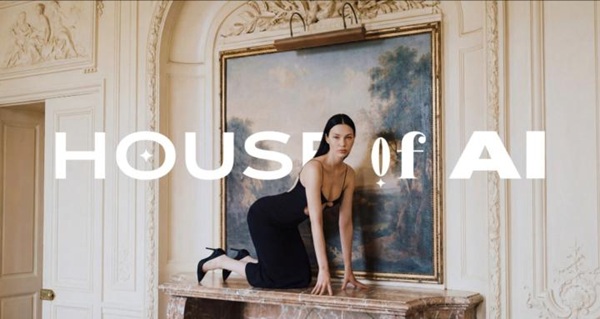
The landscape of cinematic creation is undergoing a seismic shift, driven by the rapid advancement and integration of artificial intelligence tools. Within this evolving ecosystem, the concept of the House of AI emerges not merely as a collection of technologies, but as a comprehensive philosophy and a structured methodology designed to transform creators from mere experimenters into fully realized filmmakers capable of executing complete narrative visions.
The Shifting Sands of Cinematic Creation
The advent of sophisticated AI in visual generation has fundamentally altered the industry’s competitive dynamics. What was once a distinguishing mark of cutting-edge production—hyper-realistic visuals—has rapidly devolved into a foundational expectation, a baseline standard that creators must meet rather than a unique advantage to leverage. This democratization of high-fidelity imagery means that the true differentiator for modern content creators no longer lies in the technical prowess to render stunning visuals, but in the far more complex and nuanced ability to shepherd a complete narrative from its nascent conceptual stages through to a polished, final edit. The challenge has moved beyond the “what” of visual possibility to the “how” of storytelling execution.
Hyper-Realism as the New Baseline
The notion of hyper-realistic visuals once represented the pinnacle of digital artistry, a domain accessible only to studios with significant budgets and teams of highly specialized artists. Generating images or sequences that convincingly mimicked reality required immense computational power, bespoke software, and years of accumulated expertise. This barrier to entry meant that any creator capable of achieving such fidelity instantly stood out, signaling a high level of technical mastery and access to advanced resources. This was the era where the visual spectacle itself was often the primary draw, a testament to the creator’s ability to push the boundaries of what was visually achievable with technology. The “wow” factor was directly tied to the photorealism, making it a powerful, albeit expensive, competitive edge.
However, the acceleration of AI development has dramatically lowered this barrier. Tools now exist that can generate astonishingly lifelike images, characters, and environments with relative ease and speed. This widespread accessibility means that the ability to produce high-quality, hyper-realistic visuals is no longer a unique selling proposition; it has become the accepted minimum requirement for many projects. Viewers, accustomed to seeing sophisticated CGI and AI-generated imagery, now expect a certain level of visual polish as a given. The shock of seeing something look real has worn off, replaced by an expectation that it will look real. This standardization means that creators who merely deliver on visual fidelity are no longer offering a competitive advantage, but are instead meeting a fundamental industry demand.
The implications of this shift are profound, forcing a re-evaluation of what constitutes true creative value. If the visual sheen is now ubiquitous, then the substance behind it—the story, the characters, the emotional resonance, the narrative arc—takes center stage. Creators must now ask themselves: if I can create anything visually, what should I create, and more importantly, how do I ensure it’s a compelling, cohesive story that resonates with an audience? This transition redirects focus from the technical “how” of visualization to the artistic “why” and “what” of narrative construction, demanding a different set of skills and a more holistic approach to filmmaking. The House of AI recognizes this paradigm shift, understanding that mastery of visual generation is only the first step in a much longer, more creatively demanding journey.
Bridging the Execution Gap
The most significant hurdle facing contemporary creators, particularly those leveraging AI, is the “Execution Gap.” This gap represents the chasm between having a brilliant idea or a visually stunning initial concept and the arduous process of transforming that spark into a fully realized, finished film ready for an audience. Many individuals possess a knack for generating compelling individual scenes, striking character designs, or breathtaking environments using AI tools. They can conjure up a visually perfect moment, a character that leaps off the screen, or a world that feels tangible. Yet, when it comes to weaving these disparate elements into a coherent, engaging narrative structure that holds together from beginning to end, they frequently falter.
This challenge is exacerbated by the very nature of AI tools, which often excel at discrete tasks—generating an image, a short animation clip, or a specific asset—rather than orchestrating a lengthy, interconnected narrative. The temptation is to focus on the novelty and impressive output of individual AI generations, leading to a collection of impressive-but-disconnected vignettes. The creative process can become fragmented, with efforts spent on optimizing prompts for a single shot or character, without a clear roadmap of how these elements serve a larger story. The result is often a portfolio of visually rich moments that lack the connective tissue of a well-paced plot, character development, or thematic resonance.
The journey from raw AI output to a finished film involves a complex series of decisions that go far beyond mere visual generation. It encompasses conceptualization, script development, storyboarding, character arc planning, pacing, editing, sound design, and musical composition. These elements are the backbone of traditional filmmaking, and their absence leaves even the most visually spectacular AI-generated content feeling hollow or incomplete. The Execution Gap is where creative paralysis often sets in; creators might have the tools to generate endless variations of scenes, but lack the structured approach or the narrative discipline to shape them into a cohesive whole. The House of AI framework is specifically engineered to address this critical divide, providing the scaffolding and methodology needed to bridge the gap between imagination and tangible, complete cinematic work.
Navigating the Abundance of AI Tools
The current technological era is characterized by an unprecedented explosion of AI tools, each promising to revolutionize creative workflows. From text-to-image generators and AI video synthesis to advanced editing assistants and narrative structuring algorithms, the sheer volume and variety of available options can be overwhelming. This abundance, while offering immense potential, paradoxically leads to a common problem: creative paralysis. When creators have the capacity to generate virtually anything, the question of “what should I create?” becomes daunting, often leading to a state of indecision, scattered experimentation, and ultimately, unfinished projects. This is the “Problem of Abundance.”
This phenomenon mirrors earlier technological shifts. The advent of digital photography initially created a similar challenge for photographers; instead of being limited by film rolls and development costs, they suddenly had the ability to take thousands of photos. This led some to produce vast, unfocused bodies of work, while others found it harder to select and refine their best shots. Similarly, the early internet, with its limitless potential for information access and content creation, resulted in a digital Wild West where quality was highly variable, and signal was often lost in the noise. AI filmmaking tools amplify this effect exponentially. A creator can spend days, weeks, or even months exploring different visual styles, character archetypes, or plot premises, generating a vast library of assets and scenes.
However, without a guiding structure or a clear objective, this exploration can become aimless. The process can devolve into a cycle of generating, evaluating, tweaking, and regenerating, without ever reaching a point of decisive action or completion. This constant state of flux prevents creators from committing to a specific vision, refining it, and seeing it through to a finished product. The lack of a defined path means that valuable creative energy is expended on exploring endless possibilities rather than on the disciplined execution required to bring a single, compelling idea to fruition. The House of AI tackles this head-on, offering a structured methodology that helps creators cut through the noise, make decisive choices, and channel the power of AI into a focused, narrative-driven output, transforming potential paralysis into potent productivity.
The House of AI Framework – A Structured Path to Completion
The Seven-Day AI Filmmaker’s Blueprint, embodied by the House of AI methodology, is meticulously designed to accelerate the transition from a nascent concept to a fully realized final product. This structure is not merely a time constraint; it’s a strategic framework that imbues the filmmaking process with urgency, focus, and a data-driven approach. It acknowledges that while AI tools grant immense creative freedom, that freedom must be channeled through a robust pipeline to yield tangible results. The blueprint supports this accelerated journey through a sophisticated integration of technical assets and rigorously structured workflows, ensuring that creators can navigate the complexities of AI filmmaking with efficiency and purpose, moving beyond scattered experimentation towards a disciplined, end-to-end production cycle.
The Seven-Day Accelerate Program
At the heart of the House of AI methodology lies a deliberately structured seven-day timeline, a compressed yet comprehensive program designed to foster rapid development and immediate execution. This intensive approach is a direct response to the common issues of creative stagnation, the tendency towards weak technical outcomes when methods are not standardized, and the pervasive problem of unfinished projects that plague many creators experimenting with powerful AI tools. By imposing a tight deadline, the framework compels creators to make decisive choices, prioritize effectively, and move through the production phases with a sense of controlled urgency. This is not about rushing for the sake of speed, but about optimizing workflow efficiency and eliminating the procrastination that often accompanies limitless creative potential.
The seven-day structure forces a practical application of filmmaking principles within the AI context. It encourages creators to think holistically, from concept to final cut, within a condensed timeframe. This forces an understanding of how each decision—from initial story beats to the final edit—impacts the overall narrative and timeline. It’s about learning to work with the AI, understanding its strengths and limitations, and integrating it seamlessly into a traditional production cycle, albeit at an accelerated pace. The program aims to instill discipline, forcing creators to define their vision clearly and commit to its execution, rather than getting lost in endless iterations or chasing the next technological novelty. This accelerated process is supported by a curated mix of essential technical assets and a clear set of structured workflows, ensuring that the speed gained is not at the expense of quality or coherence.
Furthermore, the seven-day model cultivates a high-performance mindset. It mirrors the rapid iteration cycles found in professional production environments, where deadlines are firm and output is continuous. By experiencing this compressed production cycle, creators develop resilience, problem-solving skills, and a sharp intuition for what is essential to achieving a finished product. They learn to identify and overcome bottlenecks quickly, making the most of the available AI capabilities without becoming overwhelmed by them. The House of AI framework, through its seven-day sprint, transforms the abstract potential of AI into concrete, completed cinematic works, fostering a habit of completion and professional execution that extends far beyond the initial training period.
Core Technical Pillars – Prompts, Workflows, Custom Tools
The House of AI methodology streamlines the technical aspects of AI filmmaking through three fundamental pillars, designed to provide both structure and enhanced capability. These pillars work in concert to ensure consistency, efficiency, and higher quality output, addressing the core needs of creators who are moving beyond basic experimentation. They form the technical foundation upon which a complete narrative can be reliably built, transforming raw AI potential into usable, high-fidelity cinematic assets and sequences.
The first pillar, Alpha Prompts, provides optimized starting points for generating specific visual styles and elements. Instead of relying on generic or ad-hoc prompting, Alpha Prompts are pre-developed, refined queries designed to elicit precise aesthetic results. These are not just keywords; they are carefully constructed instructions that guide the AI towards a particular mood, lighting, composition, or artistic style. They act as foundational templates that can be adapted, ensuring that the visual output is not only high-quality but also stylistically consistent with the creator’s overall vision. This significantly reduces the time spent on trial-and-error prompting and minimizes the risk of generating visuals that are technically proficient but artistically discordant. They represent distilled wisdom from experienced users, offering a shortcut to professional-grade visual generation.
Secondly, Workflows are standardized procedures that ensure consistency and predictability throughout the entire filmmaking process. This pillar addresses the need for order in what can be a chaotic creative environment. Workflows provide step-by-step guidelines for key production stages, from asset generation and management to scene assembly and post-production refinement. They define how different AI tools interact, how assets are organized, how versions are managed, and how progress is tracked. This systematic approach is crucial for maintaining coherence, especially in longer projects or when collaborating. By adhering to established workflows, creators can ensure that the quality and style remain consistent across different scenes and assets, preventing the disjointed feel that often plagues AI-generated content. These workflows are built upon professional production experience, adapting traditional filmmaking practices to the unique demands of AI.
The third pillar, Custom AI Tools, refers to proprietary or specialized tools developed to extend and enhance standard AI output. These might include fine-tuned AI models, specialized plugins, or custom interfaces designed for specific creative tasks. These tools go beyond the capabilities of off-the-shelf AI solutions, allowing creators to achieve unique visual effects, more precise control over generated elements, or more efficient integration with other production software. For instance, a custom tool might enable finer control over character animation, more realistic physics simulation for generated environments, or accelerated rendering times for complex sequences. These tools represent a significant advantage, enabling creators within the House of AI to push the boundaries of what is possible and to imbue their work with a distinct, professional polish that sets it apart from generic AI output. Together, these three pillars provide a robust technical backbone for AI filmmaking.
From Fragmented Pixels to Cohesive Storytelling
The journey through the House of AI framework is fundamentally about transforming fragmented potential into cohesive storytelling. It acknowledges that the power of AI lies not just in its ability to generate stunning visuals in isolation, but in its capacity to serve a narrative purpose. The process meticulously guides creators to move beyond the allure of individual, impressive AI outputs—a hyper-realistic character model, a breathtaking alien landscape, a dynamic action sequence—and integrate these elements into a unified artistic vision. This involves a deep understanding that cinematic success hinges on the synergistic interplay of all its components, orchestrated to serve the story’s emotional and thematic core.
This transition requires a mental shift from being a “prompt engineer” to becoming a “filmmaker.” A prompt engineer focuses on the immediate output of a specific query, optimizing for visual fidelity or novelty. A filmmaker, however, thinks about the entire narrative arc, character development, pacing, emotional resonance, and thematic depth. The House of AI bridges this by applying traditional filmmaking principles—conceptualization, pre-production, production, and post-production—to the AI toolkit. In pre-production, this means detailed storyboarding, character backstory development, and defining the visual language that will underpin the entire film, ensuring that every AI-generated asset serves a pre-determined narrative function.
During production, the focus shifts to assembling these assets into coherent scenes, ensuring continuity in character appearance, environment design, and overall mood. This phase is where the iterative nature of AI is leveraged not just for generating new content, but for refining existing pieces to better fit the developing narrative. Post-production then becomes the critical stage for weaving everything together. This involves the meticulous work of editing scenes for rhythm and flow, adjusting pacing to build tension or convey emotion, integrating sound design and music to enhance the viewer’s experience, and performing final color grading to achieve a consistent visual tone. The House of AI framework provides the structure and discipline to ensure that this complex post-production process is not an afterthought, but a vital culmination of the entire creative effort, transforming a collection of impressive AI-generated components into a singular, impactful cinematic narrative.
The Professional Foundation of the House of AI
The House of AI is positioned not merely as a technical toolkit or a methodological guide, but as a professional ecosystem informed by decades of traditional industry experience and the imperative for rapid, feedback-driven iteration. It draws heavily on the principles that underpin successful production houses, adapting them to the unique capabilities and challenges presented by artificial intelligence. This professional foundation is established by experts with deep roots in practical filmmaking, ensuring that the AI tools and workflows are applied with a seasoned understanding of narrative, audience engagement, and efficient production management, rather than being driven solely by theoretical AI knowledge.
Expert Leadership and Proven Experience
The credibility and effectiveness of the House of AI framework are fundamentally anchored in the extensive professional production experience of its architect, Nick Sabatalo. His credentials are not just a testament to AI literacy; they represent over 14 years of hands-on involvement in professional production, encompassing the oversight of more than 1,000 campaigns and collaboration with over 350 diverse brands. This deep well of practical experience is crucial because it allows for the application of AI technology through the lens of proven filmmaking wisdom. Instead of abstract AI theory, the House of AI offers a methodology forged in the crucible of real-world production challenges, audience expectations, and commercial viability.
This foundation in traditional production provides a critical advantage. Sabatalo’s experience means he understands the intricacies of storytelling, the importance of pacing, the nuances of character arcs, and the practicalities of delivering a finished product on time and on budget. This knowledge allows the framework to integrate AI tools in a way that enhances, rather than disrupts, the fundamental principles of filmmaking. It means that the generated visuals and narratives are guided by an understanding of what makes a film compelling to an audience, not just what is technically possible with AI. This blend of cutting-edge AI capability with seasoned industry insight ensures that the House of AI produces creators who are not just adept at using AI, but are capable filmmakers who can apply these powerful tools to craft meaningful and effective cinematic experiences.
The emphasis on professional experience also means the framework is designed to address the very real-world problems that creators face, such as creative blocks, technical limitations, budget constraints, and the pressure to deliver high-quality results consistently. By drawing from a vast portfolio of successful projects and brand collaborations, the House of AI offers insights and workflows that have been tested and refined in high-stakes environments. This translates into a more robust, reliable, and ultimately more effective approach to AI filmmaking, equipping creators with the skills and mindset necessary to thrive in the evolving media landscape. It’s about leveraging AI not as a novelty, but as a sophisticated tool within a mature production discipline, guided by leadership that understands the entire ecosystem.
The Collaborative Ecosystem – Iteration and Feedback
The House of AI operates as a dynamic, collaborative ecosystem designed to foster rapid growth and continuous improvement, mirroring the high-energy environments found in professional creative hubs. The culture within this framework is defined by two interdependent principles: iterative building and robust feedback loops. Creators are actively encouraged to build and share their work immediately, embracing a process of continuous creation and refinement. This immediate output is vital; it prevents ideas from stagnating in conceptual stages and allows for practical, hands-on learning. By posting work swiftly, creators gain momentum and create tangible progress, moving from abstract plans to concrete outputs that can be evaluated.
This practice of immediate iteration is powerfully amplified by the integrated feedback loops. The environment thrives on rapid feedback, allowing creators to quickly identify areas for improvement, test hypotheses, and refine their artistic and technical choices. This is not simply about receiving critique; it’s about engaging in a constant dialogue that accelerates learning and sharpens creative instincts. Feedback, whether from peers, mentors, or automated systems, provides crucial insights that help creators stay ahead and adapt to the rapidly evolving demands of AI filmmaking. It helps to course-correct early and often, preventing major deviations from the project’s goals and ensuring that the final product aligns with the creator’s vision.
Crucially, this structured, feedback-driven environment is specifically engineered to eliminate the guesswork that often paralyzes creators, particularly those who struggle with initiating projects or leaving ideas half-finished. The House of AI provides clarity on what steps to take next, how to evaluate progress, and how to integrate feedback constructively. By fostering a culture where creation and critique happen in rapid succession, the framework instills a professional discipline. Creators learn to embrace iteration not as a sign of imperfection, but as an essential part of the creative process that leads to higher quality outcomes. This collaborative, fast-moving room cultivates a mindset of resilience, adaptability, and constant learning, preparing individuals to navigate the complexities of AI filmmaking with confidence and efficiency.
Cultivating Complete Filmmakers, Not Just Prompt Engineers
A central ambition of the House of AI framework is to transcend the role of the “prompt engineer”—an individual skilled primarily in instructing AI to generate specific outputs—and instead cultivate “complete filmmakers.” This distinction is critical in the evolving landscape where visual generation is becoming commoditized. The framework recognizes that true artistic impact and professional success in cinema stem from a holistic understanding of narrative, character, pacing, thematic depth, and the entire production pipeline, encompassing pre-production, production, and post-production. It aims to equip creators with the comprehensive skill set required to not only generate stunning visuals but to weave them into compelling, coherent, and emotionally resonant stories.
The methodology systematically guides creators through every stage of the filmmaking process, adapting traditional cinematic practices to the AI era. This includes developing robust pre-production strategies such as conceptualization, script refinement, character design with intentional arcs, and visual styling that serves the narrative. During production, creators learn to manage the generation of core assets—characters, environments, props—with a focus on consistency and narrative relevance. The crucial post-production phase is then emphasized, empowering creators to master editing, refine the narrative structure, implement sound design, and apply final touches that elevate the work from a collection of AI-generated elements to a polished cinematic piece. This integrated approach ensures that AI is utilized as a powerful tool within a broader artistic and technical discipline, rather than being the sole focus.
By embracing expert workflows and professional production experience, the House of AI provides a structured pathway for creators to mature beyond the immediate gratification of AI generation. It teaches them to think strategically about story, character motivation, emotional impact, and audience engagement. The emphasis on iterative building and rapid feedback loops further hones these skills, fostering adaptability and a professional mindset. The ultimate goal is to empower individuals to conceive, execute, and deliver finished cinematic products that possess both visual sophistication and narrative substance, thereby solidifying their position as versatile and accomplished filmmakers capable of navigating the complexities of the modern media industry.
Conclusion
The Seven-Day AI Filmmaker’s Blueprint, as embodied by the House of AI, signifies a pivotal evolution in creative production, moving beyond the novelty of AI asset generation towards the disciplined practice of AI filmmaking. By integrating over 14 years of professional production expertise with cutting-edge AI tools, this framework offers a structured pathway to transform creators from mere prompt engineers into complete filmmakers. It addresses the critical industry shift where hyper-realistic visuals have become a baseline standard, highlighting that the true differentiator now lies in the capacity to execute a complete narrative from conception to finished edit. The House of AI methodology, with its emphasis on a full-cycle production pipeline, core technical assets like Alpha Prompts and standardized workflows, and a professional, feedback-driven environment, provides the essential discipline and structure needed to overcome creative stagnation, weak technical results, and unfinished projects, ultimately enabling creators to deliver polished cinematic products that resonate due to both advanced visuals and compelling storytelling.
Sales Page:_https://www.skool.com/production
Delivery time: 12 -24hrs after paid